The Agitation of the Mind: Despicable Me 2

  • Subscribe to our RSS feed.
  • Twitter
  • StumbleUpon
  • Reddit
  • Facebook
  • Digg

Wednesday, 9 March 2011

The Sillitoe project

Posted on 12:33 by Unknown
I was born and bred in Nottingham. I still live there. I live on an estate that repetitively and hyperbolically gets mentioned in the press whenever the focus is on gun crime or knife crime. Nottingham, in recent years, has been foisted with a reputation as the gun capital of the UK. “Shottingham”, as the tabloids like to bleat. Like I say, I’ve lived here all my life. Only twice have I ever seen someone carrying a gun: a security guy at the airport in Rome, and a border guard at the Canadian/Alaskan border. Yup, I live in fucking Nottingham and I needed to go abroad to see someone packing heat.

It’s a shame that my home town gets such a bad rap. And yes, we have our share of slum neighbourhoods, financially disenfranchised residents (I’m not judging; God knows, if I found myself out of work for more than a month, I probably be out on the streets myself), alcohol and drug users, and certain areas where, to quote Bruce Springsteen, “when you hit a red light you don’t stop” (streets and back alleys, in other words, where the fault is yours and yours alone if you stray after dark).

And yet Nottingham has an established literary heritage – Lord Byron, D.H. Lawrence, Alan Sillitoe, John Harvey, Nicola Monaghan – and a nascent cinematic one. Karel Reisz’s classic film adaptation of Sillitoe’s ‘Saturday Night and Sunday Morning’ was largely filmed in the areas described by Sillitoe in his belligerently brilliant novel; more recently, filmmakers Shane Meadows, Chris Cooke (‘One for the Road’) and Steven Shiel (‘Mum & Dad’) have come to the fore.

When Alan Sillitoe died in April last year, I felt it like a kick in the guts. When someone I admire dies, there’s always a sense of sadness. But sometimes someone dies who defines your life in some way and you feel their loss as if a loved one had passed away. I remember growing up to the erudite and witty observations of Alistair Cooke’s ‘Letter from America’ on the radio on a Sunday morning. I used to get up before nine o’clock on a Sunday just to listen to it. The day I heard of his death, I drove to work with tears in my eyes. I’d never met the man, but he’d been a part of my life.

The death of Alan Sillitoe was worse. He was one of the most famous sons of my home town. His debut novel ‘Saturday Night and Sunday Morning’ could have been written about my family. Swap Arthur Seaton’s lathe for a miner’s lamp and retain his “us and them” attitude and you could have my grandfather. Take his “don’t let the bastards grind you down” belligerence and stick it behind the steering wheel of a 16-tonne truck and you’re part way towards my father. Take Seaton’s philosophy that “whatever people think I am or say I am that’s what I’m not because they don’t know a bloody thing about me” and that’s why I refused to take a Myers Briggs personality test at work last week.
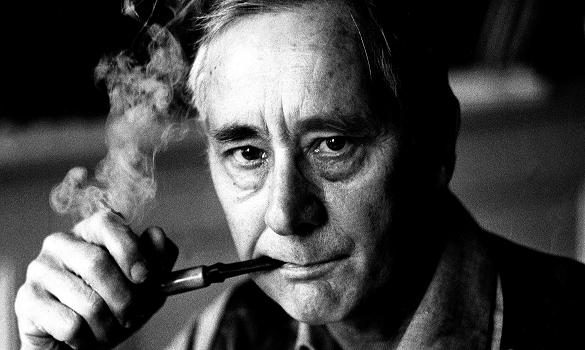
Maybe the “us and them” thing is a peculiarly British characteristic. Maybe it comes of centuries of the landed gentry – the upper classes – grinding the noses of the likes of my family line into the mud that makes me respond to the rebellious cadences of ‘Saturday Night and Sunday Morning’. Generations ago, two Fulwood brothers undertook some work as casual labourers for a Nottinghamshire lord of the manor. He fucked them over re: payment. They laid in wait for him one evening as he returned from a day’s riding, fetched him off his horse, and kicked the shit out of the toffee-nosed bastard. (I take more pride in being descended from these guys than anything else in my family history.) Quickly, though, they came round to the fact that they’d just twatted an aristocrat. They laid tracks for Southampton, stowed away on a steamer and there is now a branch of the family in Canada. I trust they’re prosperous, rebellious and have no use for the aristocracy.

But I digress. When Alan Sillitoe passed, it was as if the only novelist in Britain who’d accurately captured the flavours and experiences of my city and my personal history had suddenly been taken away from us. Even more depressing, as the obituaries began to appear, was how repetitively the commentators fixated on his first two books, ‘Saturday Night and Sunday Morning’ and ‘The Loneliness of the Long-Distance Runner’, as if these two works – and their respective film adaptations – were the be all and end all of Sillitoe’s output.

It was only later, having posted a review of Reisz’s ‘Saturday Night and Sunday Morning’ by way of a tribute, that I realized I’d adhered to exactly the same narrow-minded response. I also realized that, as much as reading Sillitoe’s early work in my mid-teens had solidified my ambition to be a writer, I’d only read about a third of his output. Cruising bookshops during the last week or two to plug the gaps in my Alan Sillitoe collection, it’s depressed me the most to discover that many of his novels and non-fiction works are out of print.

It got my mad up. I hit Amazon and eBay. I placed bids. I placed orders. I gave the PayPal account a bit of a workout. This week, I have received copies of ‘The General’, ‘Key to the Door’ and ‘The Death of William Posters’. I have located nine other works that won’t set me back more than £2 per copy. I reckon I should be able to amass the entire collection (excepting his poetry and children’s books) within the next two months.

I’ve very seldom posted book reviews on The Agitation of the Mind, and even then only film-related titles. This is changing. From next week, on a fortnightly or monthly basis depending on availability of titles and how long it takes me to read them (‘The General’ is 160 pages, ‘Her Victory’ almost 600), I’ll be working my way sequentially through Alan Sillitoe’s bibliography and posting reviews, as well as looking at the handful of his works that were adapted for cinema: most famously ‘Saturday Night and Sunday Morning’ which made a star out of Albert Finney, and ‘The Loneliness of the Long-Distance Runner’, starring Tom Courtney; in addition, I’ll be trying to track down ‘The Ragman’s Daughter’ (filmed, like ‘SN&SM’ on the cobbled streets of Nottingham) and ‘Counterpoint’ (based on ‘The General’) which, thus far, is the only Sillitoe novel to get the Hollywood treatment, with Charlton Heston and Maximillan Schell knocking heads in a war drama.

Next week’s post will be a prelude to the reviews proper, and present a brief biographical overview of Alan Sillitoe.
Read More
Posted in Alan Sillitoe | No comments

Monday, 7 March 2011

Myth and countermyth: responses to the Kennedy assassination (guest article by J.D.)

Posted on 12:43 by Unknown
My thanks to J.D. from the excellent Radiator Heaven, for contributing this in-depth and insightful article.

The assassination of American President, John F. Kennedy is a watershed event in American history that has provoked people to question their own beliefs and those of their government. Yet, for such a highly publicized affair there are still many uncertainties that surround the actual incident. Countless works of fiction and non-fiction have been created concerning the subject, but have done little in aiding our understanding of the assassination and the events surrounding it. As Don DeLillo comments in his novel, Libra, "Powerful events breed their own network of inconsistencies." DeLillo also makes this observation in an essay entitled, "American Blood" in Rolling Stone magazine, which contains the groundwork for issues that he would later explore in more detail in Libra. DeLillo's novel depicts the events leading up to and after the assassination like a densely constructed film complete with jump cuts and multiple perspectives. This creates a strong parallel between Libra and Oliver Stone's film, JFK which covers much of the same ground and uses many of the same techniques but to achieve different conclusions. Libra and JFK present the assassination as a powerful event constructed by its conspirators to create confusion with its contradictory evidence, to then bury this evidence in the Warren Commission Report, which in turn manifests multiple interpretations of key figures like Lee Harvey Oswald. Libra examines the conspiracy to kill Kennedy as an ambiguous occurrence filled with many coincidences, loose ends, and viewpoints; in contrast, JFK offers a more structured examination of the conspiracy from one person's point of view where everything fits together to reveal a larger, more frightening picture implicating the most powerful people in the U.S. government. Libra and JFK are works which present the Kennedy assassination as a moment that contains many discrepancies and misleading facts, but differ in their presentation of how this affects our perception of the event.

For Don DeLillo, the Kennedy assassination is an important event not only in his life, but as an author. The affair has had a profound effect on DeLillo who states that "it's possible I wouldn't have become the kind of writer I am if it weren't for the assassination." The assassination left DeLillo with the feeling that he had lost a "sense of manageable reality" which made him more aware of "elements like randomness and ambiguity and chaos." It is these feelings that DeLillo would later convey in the character of Nicholas Branch in Libra. Branch must come to terms with his own feelings of confusion and self-doubt while investigating the death of Kennedy and the conspiracy that surrounds it. DeLillo expresses these feelings of randomness and ambiguity in the incidences leading up to the assassination. They are often presented in an uncertain way to convey the conflict between the facts, the eyewitness accounts, and the memories that often contradict one another, obscuring the truth. History has been manipulated so that we can no longer tell the difference between fact and fiction. There is a passage in Libra where Lee Harvey Oswald gets into a shoving match with some Anti-Castro Cubans and not even Oswald can remember how it was started. There is a sense that not only the reader is being manipulated, but the characters as well. This is apparent when DeLillo writes, "Lee felt he was in the middle of his own movie. They were running this thing just for him.” Oswald recognizes that the boundaries between what is real and what is not are beginning to blur. The simplest facts like his run in with Anti-Castro Cubans "elude authentication" because the origins of the event are unknown and we are left to theorize what the motivations were for it happening.

JFK also creates this blur of reality and fiction by mixing real footage with staged footage so that it becomes difficult to discern what really happened and what is merely speculation. Oliver Stone does this in order to create what he calls "a countermyth to the myth of the Warren Commission because a lot of the original facts were lost in a very shoddy investigation." Like Libra, JFK presents the incident between Oswald (Gary Oldman) and the Anti-Castro Cubans as a simple event which becomes obscured by multiple interpretations. Stone begins the scene in 16mm, black and white film stock and then switches to Super 8mm in color with Jim Garrison (Kevin Costner) narrating the whole scene. Stone is presenting three different points of views in this scene; one in 16mm black and white, one in Super 8mm color, and Garrison's own narration: “It was a public event, it was seen by people, and to this day there are different versions of what happened that day. Were the Cubans really angry, or was it a stunt? Was it a staged arrest? We wanted to fracture the perception of it as a mere flashback from across the street.” The change to Super 8mm symbolizes a different view or reading of the event as reconstructed in the mind of the film's protagonist, Jim Garrison. This is similar to what the characters in DeLillo's Libra experience, except that there is no single protagonist as there is in JFK. Instead, Stone creates different points of views or "layers" through the extensive use of flashbacks within flashbacks. This technique conveys the notion of confusion and conflict within evidence that Libra creates through its various protagonists.

One of the major sources of this confusion of data and information stems from the Warren Commission Report which DeLillo describes as "a ruined city of trivia." This encyclopedic novel is a microcosm of the assassination itself. It takes simple facts and scatters them about to create a convoluted path that both Nicholas Branch and Jim Garrison must navigate in order to find the truth. As Garrison explains, "It's all broken down and spread around and you read and the point gets lost." Garrison begins to interview people who testified in the report only to find that, as one witness points out, "It was a fabrication from start to finish." Within the report there are contradictions and forged testimonies supporting the government's theory that Oswald acted alone and that there was no conspiracy. Like the assassination itself, the Warren Report contains all the facts but distorts and presents them in such an unorganized fashion that any attempt to piece together a coherent narrative or conspiracy is "like drowning." It is up to Garrison to make sense of this mess and establish a coherent narrative which he does at the conclusion of the film when he presents his case in court.

The facts clearly aid the conspirators who, with some convenient coincidences like Kennedy's decision to visit Dallas, create a puzzling trail for Branch to follow. To this extent, the conspirators even create figures like Lee Harvey Oswald, who are ambiguous in nature. From the start, the conspirators plan to put together someone, to "build an identity, a skein of persuasion and habit, ever so subtle. He wanted a man with believable quirks." The conspirators construct multiple Oswalds to support a lone assassin theory. By creating several Oswalds, the conspirators effectively create a metaphoric room of mirrors where the real Oswald cannot be separated from the many fakes. This confusion works well as Branch realizes, "They all look like Oswald. Branch thinks they look more like Oswald than the figure in profile, officially identified as him.” Branch is presented with facts about Oswald that contradict themselves. Oswald appears in several places at the same time in a rather crude fashion so that Branch no longer knows what to believe. DeLillo shows how these multiple images of Oswald, created by the conspirators, are rough but effective in masking the real man. Branch is able to separate the multiple Oswalds, but this still does not get him any closer to the heart of the conspiracy or the true nature of Oswald. Branch has become tired of sorting through these lies and longs for a more structured path where everything is black and white.

This structured path lies in JFK as Garrison and his team also sort through the multiple Oswalds. Stone presents many of the same events as described in Libra while also crosscutting footage of an unknown person piecing together a photograph. This in turn is crosscut with real photographs of Oswald and staged shots of Stone's Oswald. As the mysterious photograph is completed, it is revealed to be the famous Life magazine cover of Oswald with the rifle that supposedly killed Kennedy and that "pretty much convicted Oswald in the public eye," as one character observes. This mixing of footage, both real and staged, symbolizes Oswald's various pasts, both real and faked. By showing the famous Life photograph being doctored, Stone is using that as a metaphor for Oswald's past. On the surface it looks believable, but upon closer scrutiny there is a more complex story as Garrison wisely notes, "They put Oswald together from day one." This is true both figuratively as the montage of fake Oswalds demonstrates and literally as the construction of the famous photograph illustrates.

DeLillo is an author clearly aware of film techniques: the energy they contain and the power they convey. This is clearly established in his essay, "American Blood" where he states, "Violence itself seems to cause a warp in the texture of things. There are jump cuts, blank spaces, an instant in which information leaps from one energy level to another." This effect is used in describing the death of Kennedy. DeLillo presents four different perspectives of the event: one from Oswald's point of view, a second from another hired assassin, a third from a woman on the grassy knoll, and a fourth from Nellie Connally. DeLillo effectively jumps from one perspective to another in order to show the assassination from all the crucial vantage points; from the casual observer, to someone right in the motorcade, to one of the assassins. Each jump cut causes "a warp in the texture of things" so that there is a feeling of chaos intruding on the event. As each account is presented, information "leaps from one energy level to another" and a disordered view of the assassination is revealed. By presenting these various perspectives, DeLillo is commenting on how an event can be interpreted differently by many people so that there is no clear cut reading.

JFK adheres to DeLillo's above statement in an even more precise fashion with its depiction of the assassination. Stone mixes real footage of Kennedy's motorcade with his own footage, while also using various film stocks to show the multiple interpretations of a public event that was viewed by many people. Stone jumps from Kennedy's arrival in Dallas to his motorcade heading for Dealy Plaza with several quick edits. He also crosscuts footage of a clock at Dealy Plaza to show that time is running out for Kennedy, he will soon be killed. This quick rhythm of editing creates an anxious mood and the tension increases. The film cuts to black followed by the sound of a gun being cocked and then fired. Kennedy has been shot. A black and white shot of a rooftop with birds flying into the sky appears with the sound of the gun shot echoing into the distance. Stone has taken what DeLillo has said in his essay and translated it visually. Stone "jump cuts" from the footage of the motorcade to a "blank space" for an instant so that "information leaps from one energy level to another." We go from the energy of the assassination to the shockwaves that ripple out by introducing the film's protagonist, Jim Garrison and showing his reaction to what has happened This is the leap that DeLillo writes about it in his essay, but depicted visually. By mirroring DeLillo's statement with this sequence Stone creates the strongest link between his film, which seems conscious of DeLillo's essay, and Libra.

Libra and JFK are important works in the sense that they accurately portray the assassination of John F. Kennedy as a complex public event surrounded by chaos and confusion. Both works present an intricate conspiracy at the source of the killing, but diverge at how they present it. Libra reaches the conclusion that the conspiracy to kill Kennedy "succeeded in the short term due mainly to chance." DeLillo presents several points of view, ranging from the individual conspirators, who create a confusing web of information and elaborate figures like Lee Harvey Oswald, in order to dissuade characters like Nicholas Branch from trying to make sense of it all. The conspiracy starts as a small affair discussed by a few men that grows into a large chaotic web that connects all the characters through chance and coincidence.

JFK, on the other hand, contains one main protagonist who exposes the conspiracy to be an intricately constructed coup d'état. Stone does not have the time to go into as much detail as DeLillo's novel and as a result paints his canvas with broad brushstrokes and powerful images in an attempt to create "a countermyth to the myth of the Warren Commission." DeLillo opts for a more intellectual and detailed examination of the assassination as one character in Libra explains, "Let's devote our lives to understanding this moment, separating the elements of each crowded second." JFK takes a larger, confrontational stance by boldly implicating the government in the conspiracy and the mainstream media in conspiring to cover it up. Stone is using the persuasive power of film to reach the largest number of people he can in order to wake them up and to reveal how they have been deceived by higher powers. There is no mistaking the importance of the assassination of Kennedy in American culture. Both Libra and JFK are proof that Kennedy's death continues to intrigue and interest people who are more open to the idea of a conspiracy that these works openly advocate.
Read More
Posted in Don DeLillo, Gary Oldman, Kevin Costner, Oliver Stone | No comments

Sunday, 6 March 2011

GIALLO SUNDAY: In the Folds of the Flesh

Posted on 03:30 by Unknown
Sergio Bergonzelli’s sort-of giallo commences in fairly generic, albeit elliptically edited fashion, as an escaped criminal fetches up at a large and isolated house where a women who may be the matriarch or the governess is burying a decapitated corpse. The police turn up and our fleeing felon is re-arrested. Our corpse-interring femme fatale manages to get the job done in time and evade suspicion. A couple of children witness the evening’s activities.

I was confused, throughout this brief prologue, as to whether Bergonzelli was striving for a subversion of genre tropes by means of visual non sequiturs and a total disregard for conventional mise-en-scene, or whether he just couldn’t direct worth shit and didn’t know how an editing machine worked. This sense of polarity permeates the rest of the film.

Fast forward thirteen years and we have the matriarch or governess, Lucille (Eleanora Rossi Drago) still resident at the isolated old house, which for some reason has a fucking howitzer in the garden …

… and trying to care for the now grown-up but utterly dysfunctional children, Falesse (Pier Angeli, credited as Anna Maria Pierangeli) and her brother who I’ll just call Bro for the purposes of this review since it’s been a fortnight since I watched the film, I’ve forgotten the character’s name, I didn’t recognize the actor and IMDb is kind of sketchy on this one. Anyway, Falesse is psychologically disturbed, having flashbacks to the night she killed her father after he attempted to sexually assault her. The whole incest/sexual trauma angle doesn’t, however, stop her flouncing around the house in any number of slinky outfits and getting rather too cozy with Bro.

One day, a former associate of Falesse’s father – who we learn was a gangster type – turns up and makes himself at home. There is an immediate antagonism between him and Bro, particularly when Associate Dude (yeah I know, I really should have took notes) takes a fancy to Falesse. For a very short period of time, we’re on familiar ground: it’s Associate Dude vs. the Fucked Up Family in a psychological cat and mouse game which will surely culminate in the resolution of what happened to Falesse’s father and what Associate Dude’s ulterior motives are.

Then this plot strand is abruptly curtailed and, whaddaya know, here’s Pascal (Fernando Sancho) – our on-the-law-but-sent-back-to-clink bad dude from earlier. He’s out of the slammer now and out for a little blackmail. He breaks in at gunpoint and ‘In the Folds of the Flesh’ takes a swift and unsignposted turn into home invasion territory. Then Bergonzelli pulls the rug again and the supposedly dead gangster turns up claiming plastic surgery and the passage of time to account for the fact that he looks completely different. But is it even him?

By the time the denouement – a mishmash of cod Freudian psychology, police procedural tropes, last-minute revelations, concentration camp flashbacks, nonsensical screeds of exposition and soap opera histrionics – rolls around, odds are you’ll probably be too baffled to care. ‘In the Folds of the Flesh’ obviously wants to be trippy, mysterious and outré, a puzzle-box of a movie wrapped in psychedelic colours. Much of the time, however, it just comes off as pointless. The mid-section, dealing with Pascal’s blackmail attempt, demonstrates a ridiculous degree of complicity on the part of Lucille and her brood. The overacting has to be seen to be believed.

The 38-year old Angeli, cast as a 20-year old and saddled with a blonde fright-wig, is heartbreaking to watch in this knowing that it was her antepenultimate film and that she committed suicide the following year.

Indeed, ‘In the Folds of the Flesh’ is a pretty depressing affair all round: its attempts at sexed-up psychological shenanigans simply fail miserably and no erotic frisson is generated whatsoever; while the concentration camp flashback – horribly conceived and even more ineptly executed – aims for exploitative and controversial, misses on both counts and emerges as just plain sad.
Read More
Posted in Eleanoria Rossi Drago, Fernando Sancho, giallo, Pier Angeli, Sergio Bergonzelli | No comments

Friday, 4 March 2011

Night of the Demons (remake)

Posted on 10:36 by Unknown
Yeah, I know. I’m doing the wiseass captions thing again. I’ll stop it after this entry. Honest.


I know this much is true: Angela being played by someone who isn’t Amelia Kinkade is like Inspector Morse being played by someone who isn’t John Thaw or Harry Callahan being played by someone who isn’t Clint Eastwood. A ‘Night of the Demons’ film without Amelia Kinkade is like Led Zep without Jimmy Page, The Who without Keith Moon, Iron Maiden without Bruce Dickinson or the Academy of St Martin in the Fields without Sir Neville Marriner.

Which brings us to the 2009 remake of ‘Night of the Demons’ and your humble blogger leaning palely from his balcony crying, “Amelia, Amelia, wherefore art thou, Amelia?”

(But lest the venerable Ms Kinkade gets named in the Agitation divorce proceedings, let’s quickly answer that question and move on to an objective evaluation of the – sob! – Amelia-devoid sequel. A dancer and choreographer before she became an actress, Kinkade made another career move after ‘Night of the Demons 3’ in 1997 – her last onscreen appearance according to IMDb – and established herself as an “animal communicator” or “pet psychic” depending on which sources you consult. Since 2001, she has published two books on the subject – ‘Straight from the Horse’s Mouth’ and ‘The Language of Miracles’ – as well as touring and lecturing. Additionally, she’s an accomplished watercolorist and also writes and illustrates children’s books. Which is about as un-Angela a curriculum vitae as you could imagine!)

However, it’s 2010 and we’re talking ‘Night of the Demons’ for the Eli Roth generation with Adam Gierasch in the director’s chair and Shannon Elizabeth as Angela. Gierasch had previously directed the old-school horror/thriller ‘Autopsy’ (which boded well) after contributing to the screenplays for the ‘Toolbox Murders’ remake and ‘Mother of Tears’ (which didn’t). The jury was out before I even sat down to watch the film.

The jury was inclined to a “benefit of the doubt” mindset during the pre-credits sequence, a playfully executed prologue set in 1925 and shot like a silent movie, including title cards for the dialogue. Kudos to the filmmakers for getting their history right: the first sound shorts were made by the then-fledgling Warner Brothers studio, with the first sound stage being built in 1927 for the Al Jolson starrer ‘The Jazz Singer’.

Unfortunately, this is the only interesting thing the ‘Night of the Demons’ remake does.

Okay, here’s the set-up: Hull House is now the Broussard Mansion, where some strange yada yada yada took place in 1925 resulting in the deaths of blah blah blah and it’s now being rented by Angela, who’s hosting a rave there. Had this movie been made, oh I dunno a couple of years after the original, the idea of demonic shit going down at a rave might have held some interest. As it is, the movie already seems old hat before it’s barely started. The desperately attention-grabbing sequence where our heroines enter the Broussard place – all slow-down-speed-up-slow-down-speed-up – also seems hopelessly dated, as if you were watching a really naff MTV video from about 10 or 15 years ago.

Angela’s big introduction is when she addresses her guests (“hey, bitches”), recounts the dark history of the Broussard family, and exhorts the partygoers to set new standards of debauchery. Apparently, this is what passes for debauchery nowadays. The Marquis de Sade is doubtless laughing in his grave.


The proliferation of annoying teenage/twenty-somethings at Angela’s rave suggests that once our hostess gets possessed, entire swathes will be cut through the guest list – my already waning attention perked briefly – but then the police appear, break up the party and it’s it left to a handful of dullards who managed to evade the ministrations of the police to fend for themselves when things turn ugly.

Let’s meet the dullards. The script never makes it clear whether our trio of valley girl heroines Maddie (Monica Keena), Lily (Diora Baird) and Suzanne (Bobbi Sue Luther) are supposed to be teenagers or roommate twenty-somethings but all of them look a little too close to thirty for characters of this ilk. If you have difficulty telling them apart, by the way, Maddie’s the one in the non-slut Halloween costume, Lily’s the one in the slut costume and Suzanne’s the one in the uber-slut costume. I think. The only way to tell them apart is the amount of cleavage on display.

Oh, by the way, welcome to trashy exploitative American horror in the modern age, where there’s lipstick lesbian tonsil-hockey, demonic anal sex, champagne bottle fellatio, blood and gore going on all over the place but a five-second glimpse of a topless barmaid and a repeat of the nipple/tube of lipstick disappearing act from the original is all you get in the way of nudity. Even a promisingly seductive dance between Angela and Suzanne (I think it was Suzanne, anyway, the one with most cleavage on display) to the strains of “Loving the Dead” by Type O Negative is swiftly curtailed in the service of an unconvincing special effect before any of the frisson of, say, Emmanuelle Seigner and Kristin Scott Thomas in ‘Bitter Moon’ can be generated.

As well as the Three Valley Girls, we have a couple of useless boyfriend types – Jason (John F. Beach) and Dex (Michael Copon) – as well as Colin (Edward Furlong).

Colin is the pansiest and least convincing drug dealer in the history of cinema, thereby at least guaranteeing ‘Night of the Demons ’09’ some small place in the annals. Colin works for crime boss Nigel (Jamie Harris), who tawks wiv an Lahdan axcent (innit?) for all the world as if he’s trying out for the next Guy Ritchie film.

Can I just say: a drug dealer called Colin and a crime boss named Nigel – what the fuck is this, a lost Dud and Pete sketch from the late Sixties?!?! (“ ’Ere, Col?” “Wot, Nige?” “Got the mahney from flogging me drugs, Col?” “Fahnny yew should menshun that, Nige, yew’d nevah belief wot ’appened to me!”)

So. The Three Valley Girls, the Two Useless Boyfriends and Colin The World’s Worst Drug Dealer find themselves trapped in the Broussard Mansion after the cops leave. They accidentally awaken a demon, you’d never guess what happens to Angela, and an hour of tired genre tropes ensues. There’s a couple of visual references to the original film (including a cameo from Linnea Quigley), the cat costumes Lily and Suzanne wear (you know, the slutty and the uber-slutty costumes) are a nod to ‘Night of the Demons 3’, all the brouhaha about the history of the Broussard family and a late in the game plot device about a room protected by spells are reminiscent of ‘The Skeleton Key’, there’s some ‘Evil Dead’-stylee cellar door business, the old arms-out-of-walls trick used in everything from ‘Repulsion’ to ‘Day of the Dead’, and a message-hidden-under-a-dislodged-layer-of-plaster revelation that’s so blatantly ripped off from ‘Deep Red’ that Gierasch may as well just have run in front of the camera and yelled, “Please don’t sue me, Dario!”


It’s a hodge-podge. A mess. And it’s pointless. The original trilogy had a combined budget that was $2 million less than Seven Arts stumped for this joyless endeavour. As cheesy as the originals were, they at least gave us a memorable villainess. Shannon Elizabeth’s Angela is just plain dull, the actress bringing none of the spark that she did to ‘American Pie’.

Here’s lookin’ at you, Amelia. We’ll always have Hull House.
Read More
Posted in Adam Gierasch, Diora Baird, Edward Furlong, Monica Keena, Shannon Elizabeth | No comments

Thursday, 3 March 2011

Night of the Demons 3

Posted on 14:42 by Unknown
Apologies for the snarky captions.


Angela’s third outing sees Kevin Tenney back on board – not in the director’s chair this time (that honour goes to Jimmy Kaufman, someone I’d not heard of before and who, accordingly to IMDb, has worked mostly in television) – but as writer and editor. His editing is passable.

It is better that we do not speak of the script.

We must, however, waltz through a synopsis, so here goes: nice girl Abbie (Patricia Rodriguez) and her popular cheerleader gal pal Holly (Stephanie Bauder) are headed for the high school dance when their car breaks down. They are offered a lift by five loose cannon teens in a black van, four of whom are male, none of whom are take-home-to-meet-your-mother material and one of whom is perpetually spoiling for a fight. Notwithstanding the inadvisability of two young women, one dressed in a catsuit, the other wearing a dancing girl costume, clambering into a black van driven by anyone (and let’s face it, short of the van having a personalized licence plate reading RAP 15 T, their chances of safe passage couldn’t be any lower), they accept said lift and off our group of unlikeable teens go, their misadventures encompassing the first half hour of the film and leading them inevitably to Hull House.

Let’s quickly introduce the tossers protagonists in the van. We have the slightly dweeby Orson (Christian Tessler), the token black character Reggie (Joel Gordon) who basically fulfils a similar requirement to Rodger in the first film only that was made in the 80s and you’d think a more reconstructed approach to casting would have been prevalent when ‘NotD 3’ was made in 1997, the brooding tough guy Nick (Gregory Calpakis), the perpertually spoiling for a fight Vince (Kris Holdenreid) and Vince’s smart-mouthed trashy girlfriend Lois (Tara Stone), a thoroughly loveless individual who gives the impression of having been round the block so many times they named it after her.

A week ago, I reviewed ‘Frozen’ and renamed it ‘Three Douchebags on a Chairlift’. I take it back. Joe, Dan and Parker from ‘Frozen’ are the loveliest, cuddliest, most sympathetic characters in all of moviedom compared to Orson, Reggie, Nick, Vince and Lois. Anyway, ‘Night of the Demons 3: Five Douchebags in a Van’ continues with said individuals pulling into a Quicky Mart (I had visions of Apu from ‘The Simpsons’ warning them “Please do not be going to Hull House, Angela has such dark powers as to make the Buddha weep. Thank you, come again”), getting into an altercation with the clerk and the situation spiralling out of control as two cops wander in. An admittedly well choreographed bit of gunplay ensues, after which the Five Douchebags (sounds like a white trash can’t-count version of a barbershop quartet: “Ladies and gentlemen, the Five Douchebags”) go on the run, with Abbie and Holly forcibly taken along for the ride.

Unfortunately – or maybe fortunately, since by this point I was aching for Angela to supernaturally fuck their shit up big time – one of the cops gets off a shot that punctures the gas tank and the resulting loss of fuel deep-sixes Vince’s fast getaway plans. So they decide to hole up at Hull House. (Parenthetically, how come, in movies, a car can impact against a tree and go up in flames, yet a bullet – travelling at, say, 900mph assuming it was fired from a .357 – can puncture a gas tank without, you know, igniting it and blowing the van to fuck?)

Once at Hull House, Angela makes an immediate appearance (this is the only film in the series when the marvellous Amelia Kinkade gets top billing) and Vince, all macho posturing and a pump-action shotgun in his hands, makes the righteous mistake of ordering her about and calling her “bitch”. On the scale of stupid, this is a couple of rungs above telling Evander Holyfield he hits like a girl and inviting him to take his best shot. Or going hunting with Dick Cheney.

Angela happily turns the teens’ defining characteristics against them. The wimpy Orson, who tries to act the big man to impress Vince, learns his lesson about the consequences of trying to hold Angela at gunpoint …

… while Abbie, jealous at Holly’s looks and popularity and secretly attracted to bad-boy Vince, is turned into a man-eating vixen … with the minor side effect that she also becomes a demon. As for Lois, who spends the movie spitting out bitchy remarks and wearing a sock puppet made up to look like a snake, well … bad fashion choice, toots.

Meanwhile, the two cops have survived the shoot-out and reported in. Lieutenant Dewhurst (Vlasta Vrana – the Rip Torn of B-movies) gets on the case. Dewhurst has two hours left on the force but would rather see them out on duty than at his retirement party. Anyone want to put money on his chances of getting to the end credits alive … anyone? Anyone?

On the one hand, ‘NotD 3’ provides the nudity- and gore-filled guilty pleasures that are requisite for this kind of movie, and at 85 minutes it’s a brisk watch. On the other hand, though, there’s none of the gleeful bad-taste joie de vivre that informs part two – specifically, there’s nothing as cheesily entertaining as the Sister Gloria/Angela smackdown that ends Trenchard-Smith’s film on such a bat-shit crazy high note. Also, it’s obvious that a different location has been used for Hull House and it’s nowhere near as run-down, shadowy and gothic as the original.

In the final analysis, you get more Angela for your money – and, damn, Kinkade still looks hella good in a black dress – but, as with the first film, she’s the only element that makes it worthwhile.
Read More
Posted in Amelia Kinkade, Jimmy Kaufman, Kevin Tenney, Patricia Rodriguez, Stephanie Bauer, Tara Stone, Vlasta Vrana | No comments

Wednesday, 2 March 2011

Night of the Demons 2

Posted on 15:04 by Unknown
Ah, this is more like it. From the pre-credits sequence where two impossibly clean cut Jehovah’s Witness types turn up at Hull House to spread the truth, the word and the light only to find Angela (Amelia Kinkade) home and in a decidedly anti-theological frame of mind, it’s clear that writers Joe Augustyn and James Penzi and director Brian Trenchard-Smith are playing the sequel for laughs as much as gore. They also give it some semblance of a plot, as well. These are good decisions.

Moreover, the script – albeit a work that was never going to give David Mamet cause to lose sleep – gives the characters dialogue that almost sounds like the way teenagers actually talk (unlike the first film, where the dialogue put me in mind of Harrison Ford’s verdict on George Lucas’s script for ‘Star Wars’: “you can type this shit, but you can’t speak it”).

Nor is the action confined solely to Hull House. Things get underway at a convent school where Angela’s traumatized sister Melissa (Merle Kennedy) – unaffectionately known as Mouse to the rest of the student body – is sheltered by nice girl Bibi (Cristi Harris), gently teased by not-quite-so-nice-girl Terri (Christine Taylor – yes, she of ‘Brady Bunch Movie’ fame) and out-and-out bullied by dyed-in-the-wool bad girl Shirley (Zoe Trilling). And if Shirley sounds too prosaic a name for a bad girl, believe me this lass has an attitude as prominent as her cleavage.

Elsewhere in this fine establishment we have Rick (Rick Peters) and Kurt (Ladd York) whose studies involve spying on the girls’ dorm (in the fine tradition of shlocky horror movies, the girls wander around the dorm topless and in the kind of lacy white panties that are less a garment than the effect of a silkworm sneezing) and nerdy type Perry (Bobby Jacoby) who is less interested in naked girls than demonology (well, whatever floats your boat, I guess) and is royally pissing off Father Bob (Rod McCary) because of said interest.

Meanwhile, wielding a mean ruler and determined to stop any outbreaks of hormonal activity (“save a little room for the Holy Ghost,” she cautions when her charges get too close), Sister Gloria (Jennifer Rhodes) strides the corridors putting the fear of God into everyone and practices fencing moves in her room.

Come the night of the Halloween dance, Shirley decides she wants more fun than is offered by Sister Gloria’s strictly regimented and alcohol-free “party” and hooks up with bad boys Johnny (Johnny Moran) and Z-Boy (Darin Heames) for a night out at Hull House. She strings Kurt and Rick along, as well as inviting Bibi and Terri as a pretext to getting them to bring Melissa along. Shirley has a nasty little prank lined up at Melissa’s expense.

There’s a couple of make-out sessions, some booze is chugged, and Shirley gets her queen bitch funk on. Then, predictably enough, Angela turns up and the whole thing goes to hell. MINOR SPOILER: Angela quickly infects Shirley by way of a lesbian kiss and a tube of lipstick from which issues a penile growth. (I’m not making this up, I am sober, and no proscribed substances have been ingested at chez Agitation. Tonight, anyway.)

So far so repetitive. Then, unlike the first film in which gates turn into walls just to keep the pathetic, jibbering so-called protagonist trapped in the grounds till the end, the teens escape Hull House and head back to Sister Gloria’s tame-by-comparison school dance. Only they’ve reckoned without two things: Perry’s misguided attempt to summon a demon (Angela, meet Perry; Perry, Angela) and the unintended transportation of an artefact from Hull House.

The evil escapes. Angela crashes the dance. Hell comes to a convent school. At which point Sister Gloria decides she’s had about enough of this shit, arms herself with crucifix, holy water and her trusty ruler, and sets out with the righteous intention of bitch slapping the forces of darkness. It’s Angie vs. Gloria, the gloves are off, and Melissa’s soul is in the balance. Seconds out!

Trenchard-Smith – his prolificity and directorial attention to detail marking him out as the Sidney Lumet of trash cinema – cuts loose as soon as Sister Gloria comes to the fore and has hella fun with it. The gore is monumentally over the top, the humour gutsy and of the darkest hue. I was left wondering how much of an inspiration this movie was on Rodriguez and Tarantino’s ‘From Dusk Till Dawn’ – the holy-water pistol is the most obvious touchstone, but the general aesthetic of the gloopy effects work and the broad irreverence with which the material is handled are also highly comparable.

The acting is better than the first movie – Trilling’s deliciously malicious turn as Shirley is a stand-out, while Kennedy conveys Melissa’s wounded innocence without ever overdoing it – and Kinkade reprises Angela like she was born to the role. The low-brow comedy suits the material and the film delivers good unclean fun, gratuitous nudity and OTT gore. I’m all for saying skip the first instalment and get your introduction to Angela right here.
Read More
Posted in Amelia Kinkade, Brian Trenchard-Smith, Christine Taylor, Jennifer Rhodes, Joe Augustyn, Zoe Trilling | No comments

Tuesday, 1 March 2011

Night of the Demons

Posted on 14:27 by Unknown
Sometimes it’s just one letter that stands between a masterpiece and a piece of something else altogether. ‘Night of the Demon’ (singular) is an incredibly atmospheric 1957 film by Jacques Tourneur, loosely but effectively adapted from M.R. James’s wonderfully chilling short story “Casting the Runes”. ‘Night of the Demons’ (plural) is a shlocky low-budget 1988 film by Kevin Tenney (who ain’t no Tourneur) from a script by Joe Augustyn (who ain’t no M.R. James). Like I say, it’s just one letter –

(Sorry, what was that? ‘Night of the Demon’ is also an abject piece of shit 1980 flick by James C. Wasson, a staple of the video nasties list, principally remembered for a scene in which a biker stops to take a roadside piss only for a sasquatch to reach out of the bushes and yank his todger off? Oh. Yeah. Bollocks. Well, that completely deep sixes that opening paragraph!)

Ahem. Moving swiftly on.

Kevin Tenney’s ‘Night of the Demons’ is a shlocky low-budget horror movie that cheerful appropriates a melange of iconography from everything from John Carpenter’s ‘Halloween’ to Lamberto Bava’s ‘Demons’ by way of every campfire story ever told and glues them together with corn syrup and red dye and absolutely no consideration for characterization, narrative or coherence.

Okay; I know what you’re thinking. You’re thinking: back the fuck up, Fulwood. You made a case for a whole smorgasbord of stalk ‘n’ slash during the 13 for Halloween project – Christ, you even managed to wring some entertainment value out of ‘Slaughter High’ – so how come you’re getting so uppity over ‘Night of the Demons’?

Well, it’s little things like this: Tenney and Augustyn spend the first third of the movie setting up character dynamics – girl-next-door Judy (Cathy Podewell) agree to a Halloween party date with Ivy League type Jay (Lance Fenton) much to the chagrin of punkish former boyfriend Sal (Billy Gallo), who bullies Helen’s smartmouthed younger brother into giving up the location of said party; the party is thrown by goth outcast Angela (Amelia “Mimi” Kinkade) who inveigles her ditzy best pal Suzanne (Linnea Quigley) into helping out on the promise that she’s invited some “cute boys”; white trash oik Stooge (Hal Holvins) and his African-American best bud/whipping boy Rodger (Alvin Alexis) perpetually squabble, much to the frustration of Helen (Allison Barron), who may or may not have romantic attachments to one, both or neither of them; obnoxious jock Max (Philip Tanzini) and his Eurasian girlfriend Frannie (Jill Terashita) flip off Stooge and Rodger when a spare tyre strands them on the side of the road en route to the bash – only for none of the romantic/racial/rivalry-based conflicts to be explored once all of the protagonists are assembled in the same isolated locale, nor any explanation given as to why Angela invited these specific characters or why they accepted given Angela’s obvious status as a pariah.

Expectations of a pressure-cooker environment exacerbated by supernatural occurrences – or, better still, the horror developing internally from these social/prejudicial mores – are punctured when they just start boogie-ing to crap ’80s music, chugging beer and pairing off for the kind of twenty-second sexual encounters that are written in purely to tick the T&A box before the special effects team turn up to tick the blood ‘n’ gore box.

‘Night of the Demons’ is the kind of film that probably came into existence because the people behind it sat around at some point and had a conversation along these lines:

“Hey, you know what would be really cool? If a bunch of teens spent a night in an old house that used to be a funeral parlour.”

“Hey, man, let’s call it Hull House. Geddit? Geddit?!?!”

“Cool. And they awaken a demon.”

“Cool. And they can’t get out because the gate they drove in through has suddenly turned into a brick wall.”

“Awesome! And there’s a séance and they break a mirror, because that’s, like, baaaad luck.”

“Dude, that’s deep. And you what? It’s a girl who gets turned into the first demon and she infects another girl by kissing her.”

“And there’s a couple who get naked and make out in a coffin.”

“Whoa, cool! And one of the girls who gets turned into a demon is a total goth chick and she does this sexy dance and then crouches in front of the fireplace and when she turns round her hands are on fire.”

“Awesome! And there’s this scene where one of the girls rips her blouse open and colours round her boobs with lipstick and then pushes the tube of lipstick into her nipple!”

“Oh, man, this is going to be the coolest movie ever!!!”

And so they wrote these individual scenes, filmed them and decided that continuity was for pussies and the function of an editing machine was much the same as that of a meat grinder.

‘Night of the Demons’ is a delivery system for boobs, blood and rampant swathes of what-the-fuckery. The dialogue is fuck-awful (teenagers didn’t even talk like this in the 50s let alone the 80s); the acting makes it look like Stella Adler had a hand in your average Ed Wood production; and only the nastily effective framing device of the grumpy old man wishing revenge on Halloween revellers brings any degree of real imagination or originality to the table.

All things considered, ‘Night of the Demons’ ought to be a boilerplate, forgettable, unworthy-of-your-time-let-alone-an-800-word-review piece of work. Except for Amelia Kinkade. Single-handedly, she turns the demonically infested Angela into a horror movie icon as mordant, malicious and memorable as any of your Freddies, Jasons or Michaels. And she looks a hell of a lot better in a black party dress.
Read More
Posted in Amelia Kinkade, Cathy Podewell, Joe Augustyn, Kevin Tenney, Linnea Quigley | No comments
Newer Posts Older Posts Home
Subscribe to: Posts (Atom)

Popular Posts

  • BLACK VALENTINES: Thirst
    Let’s try a scenario on for size: boy meets girl; obstacles prevent them from being together; boy and girl get together any way; a major o...
  • Boarding Gate
    The first film of Olivier Assayas’s I saw was ‘Irma Vep’, a dreamy fantasia on two highly different forms of cinema – the work of French dir...
  • BOND-A-THON: A View to a Kill
    Beware the temptation of the snap judgement. Particularly when undertaking a movie-thon whose entries you’re watching sequentially rather th...
  • 13 FOR HALLOWEEN #4: The Unborn
    As with ‘Giallo’ a couple of weeks ago, I approached this knowing that it had been roundly peed on by the critics, only to spend the first h...
  • 13 FOR HALLOWEEN #1: Tenebrae
    “When you have eliminated the impossible, what remains – however improbable – must be the truth.” This quote, from Conan Doyle’s ‘The Hound ...
  • Strait Jacket
    Shinji Ushiro’s hectic anime ‘Strait Jacket’ takes a premise that requires a suspension of disbelief plus VAT, welds it to a hefty chunk o...
  • A Lonely Place to Die
    Julian Gilbey was behind 2007’s ‘Rise of the Footsoldier’ – a film so mired in trite hooliganism clichés and dodgy Lahdan accents that it ma...
  • Brave
    Has the Pixar bubble burst? Two years ago, I came out of ‘Toy Story 3’ with mixed feelings – so mixed that I elected not to post a review on...
  • SUMMER OF SATAN: Alucarda
    Juan Lopez Monctezuma’s hallucinatory exploitationer is a heady and unsubtle mix of nunsploitation, sexual hysteria, Satanism, vampirism, py...
  • WINTER OF DISCONTENT: Death Laid an Egg
    Picture the scene: yours truly and his good lady wife enter a fish ‘n’ chip shop, emphatically debating yours truly’s recent film-viewing ch...

Categories

  • 13 for Halloween (29)
  • Abbie Cornish (1)
  • Abel Ferrara (1)
  • Adam Gierasch (1)
  • Adam Green (2)
  • Adolfo Celli (1)
  • Adrian Brody (1)
  • Adrien Brody (1)
  • Adrienne Barbeau (1)
  • Ahna Capri (1)
  • aimless drivel (1)
  • Akon (1)
  • Al Pacino (1)
  • Alain Cuny (1)
  • Alain Delon (3)
  • Alamanta Keller (1)
  • Alan Galton (1)
  • Alan Sillitoe (16)
  • Alan Tudyk (1)
  • Albert Pyun (1)
  • Alberto de Mendoza (1)
  • Aldo Lado (1)
  • Aldo Massasso (1)
  • Aldo Valetti (1)
  • Alec McCowan (1)
  • Alec Newman (1)
  • Alejandre Aja (1)
  • Alejandro Jodorowsky (1)
  • Alessio Orano (1)
  • Alex Angulo (1)
  • Alex de la Iglesia (1)
  • Alex Lowe (1)
  • Alex Proyas (1)
  • Alexa Jago (1)
  • Alexandra Negrao (1)
  • Alexandra Paul (1)
  • Alfred Hitchcock (1)
  • Alfredo Mayo (1)
  • Alice Braga (1)
  • Alida Valli (1)
  • Amanda Seyfried (1)
  • Amando de Ossorio (1)
  • Amber Heard (4)
  • Amelia Kinkade (4)
  • Amy Adams (2)
  • Andre Garet (1)
  • Andrea Bianchi (1)
  • Andrea Occhipinti (1)
  • Andrea Riseborough (1)
  • Andrew Weir (1)
  • Andrzej Zulawski (1)
  • Andy Devonshire (1)
  • Angelina Jolie (1)
  • Angharad Rees (1)
  • Ania Pieroni (1)
  • Anita Ekberg (2)
  • Anna Friel (1)
  • Anna Massey (2)
  • Anna Mouglalis (1)
  • Anna Proclemer (1)
  • Annalynne McCord (1)
  • AnnaSophia Robb (1)
  • Anne Heywood (1)
  • Anne Libert (1)
  • Annette Vadim (1)
  • Anthony Andrews (1)
  • Anthony Franciosa (1)
  • Anthony Hopkins (2)
  • Anthony Mann (1)
  • Anthony Steffen (1)
  • Anton Diffring (1)
  • Antonio Banderas (1)
  • Antonio Margheriti (2)
  • Anuska Borova (1)
  • Ariel Vromen (1)
  • Ariel Winter (1)
  • Armando De Razza (1)
  • Asami (1)
  • Asia Argento (3)
  • Audrey Hepburn (1)
  • Aurelian Wiik (1)
  • Austin Stoker (1)
  • Banksy (1)
  • Barbara Bach (1)
  • Barbara Bouchet (4)
  • Barbara Cupisti (1)
  • Barbara Hershey (1)
  • Barbara Leigh-Hunt (1)
  • Barbara Shelley (1)
  • Barbara Stanwyck (1)
  • Barry Foster (1)
  • Barry Pepper (1)
  • Barry Sonnenfeld (1)
  • Ben Gazzara (1)
  • Ben Kingsley (2)
  • Ben Mendelsohn (1)
  • Ben Wishaw (2)
  • Benedict Cumberpatch (2)
  • Benicio del Toro (2)
  • Berenice Marlohe (1)
  • Bernadette Peters (1)
  • Bernard Lee (6)
  • Bernard McEveety (1)
  • Bernd Eichinger (1)
  • Bette Midler (1)
  • Betty White (1)
  • Bill Hader (1)
  • Bill Paxton (2)
  • Billy Connolly (2)
  • Bitto Albertini (2)
  • Black valentines (9)
  • blog-a-thon (1)
  • Blythe Danner (1)
  • Blythe Metz (1)
  • Bo Svenson (2)
  • Bob Belling (1)
  • Bob Hoskins (1)
  • Bob Larsen (1)
  • Bond-a-thon (26)
  • Brad Anderson (1)
  • Brad Dourif (2)
  • Brad Pitt (1)
  • Bradley Cooper (1)
  • Brahim Haggiag (1)
  • Brandon Jay MacLaren (1)
  • Brenda Chapman (1)
  • Brian Cox (1)
  • Brian Langtry (1)
  • Brian Trenchard-Smith (1)
  • Brigitte Lahaie (2)
  • Britt Ekland (2)
  • Britt Nicholls (1)
  • Brooke Adams (1)
  • Bruce Greenwood (1)
  • Bruno Mattei (1)
  • Bryce Wilson (1)
  • Burt Lancaster (1)
  • Byung-ho Son (1)
  • Byung-hun Lee (1)
  • Caitlin Wachs (1)
  • Cam Gigandet (1)
  • Cameron Mitchell (1)
  • Carey Lowell (1)
  • Carice van Houten (1)
  • Carl Parker (1)
  • Carla Borelli (1)
  • Carla Brait (1)
  • Carla Gugino (1)
  • Carlo De Mejo (1)
  • Carlo Gentili (1)
  • Carlos Aured (1)
  • Carole Bouquet (1)
  • Caroline Bliss (1)
  • Caroline Munro (2)
  • Carrie Anne Fleming (1)
  • Carroll Baker (2)
  • Cate Blanchett (1)
  • Catherine Deneuve (1)
  • Cathy Podewell (1)
  • Cathy Tyson (1)
  • Catriona MacCall (1)
  • Cecile de France (2)
  • Chan-wook Park (2)
  • Chandler Canterbury (1)
  • Chantal Contouri (1)
  • Charles Bateman (1)
  • Charles Gray (2)
  • Charlie Creed-Mills (1)
  • Charlize Theron (2)
  • Charlotte Gainsbourg (1)
  • Cheech Marin (1)
  • Chiara Caselli (2)
  • Chloe Sevigny (1)
  • Chow Yun Fat (1)
  • Chris Butler (1)
  • Chris Evans (3)
  • Chris Hemsworth (1)
  • Chris Mitchum (1)
  • Chris Pine (1)
  • Chris Renaud (2)
  • Christian Bale (1)
  • Christina Lindberg (1)
  • Christina Ricci (1)
  • Christina von Blanc (2)
  • Christine Taylor (1)
  • Christoph Waltz (2)
  • Christopher George (1)
  • Christopher Jones (1)
  • Christopher Kirby (1)
  • Christopher Lee (4)
  • Christopher Mintz-Plasse (1)
  • Christopher Walken (2)
  • Clare Bloom (1)
  • Claudine Auger (1)
  • Claudio Brook (1)
  • Clifton James (2)
  • Clint Eastwood (1)
  • Clint Howard (1)
  • Coen Brothers (1)
  • Colin Firth (1)
  • Coralie Rose (1)
  • Coraline Trinh Thi (1)
  • Corbin Allred (1)
  • Corinne Cleary (2)
  • Craig Collicott (1)
  • Craig Fairbrass (1)
  • Craig Robinson (1)
  • Cristina Airoldi (1)
  • Cristine Galbo (1)
  • Curt Jurgens (1)
  • Cyril Cusack (1)
  • Dagmar Lassender (2)
  • Daniel Alfredson (2)
  • Daniel Barber (1)
  • Daniel Craig (4)
  • Daniela Bianchi (1)
  • Danielle Panabaker (1)
  • Danny Huston (1)
  • Danny Lee (1)
  • Danny McBride (1)
  • Danny Trejo (2)
  • Dante Maggio (1)
  • Dardenne Brothers (1)
  • Daria Nicolodi (1)
  • Dario Argento (6)
  • Darren Aronofsky (1)
  • Darren Moore (1)
  • Darwin Joston (1)
  • Dave Gorman (1)
  • David Bell (1)
  • David Carradine (1)
  • David Caruso (1)
  • David Duchovny (1)
  • David Fincher (1)
  • David Hemmings (1)
  • David Hess (1)
  • David Hyry (1)
  • David Lynch (1)
  • David Morrissey (1)
  • David Schwimmer (1)
  • David Soul (1)
  • David Warbeck (1)
  • Deborah Francois (1)
  • Deborah Revy (2)
  • Declan O'Brien (1)
  • Dee Wallace (1)
  • Delphine Chaneac (1)
  • Deneen Melody (2)
  • Denholm Elliott (1)
  • Denise Richards (1)
  • Dennis Dun (1)
  • Dennis Farina (1)
  • Dennis Waterman (1)
  • Denzel Washington (1)
  • Derek Cianfrance (1)
  • Derrick Buttress (1)
  • Desmond Llewellyn (4)
  • Diana Lorys (1)
  • Diana Rigg (1)
  • Diane Lane (3)
  • Dinah Sheridan (1)
  • Diora Baird (1)
  • Dirk Bogarde (1)
  • documentary (6)
  • Dom DeLuise (1)
  • Domenico Paollela (1)
  • Dominic West (1)
  • Don Cheadle (1)
  • Don DeLillo (1)
  • Don Edmonds (2)
  • Don Michael Paul (1)
  • Don Pedro Colley (1)
  • Donald Pleasance (3)
  • Donald Sutherland (1)
  • Doug Bradley (1)
  • Dustin Hoffman (1)
  • Dyanne Thorne (4)
  • E Emmet Walsh (1)
  • Ed Speelers (1)
  • Ed Stoppard (1)
  • Eddie Marsan (1)
  • Eddie Marsen (1)
  • Edgar Wright (2)
  • Edith Lemerdy (1)
  • Edward Furlong (1)
  • Edward Norton (1)
  • Edwige Fenech (4)
  • Eiji Funakoshi (1)
  • Eiko Matsuda (1)
  • Eileen Daly (2)
  • Eleanoria Rossi Drago (1)
  • Eleonora Brown (1)
  • Eli Craig (1)
  • Eli Wallach (2)
  • Elizabeth Banks (1)
  • Elizabeth Taylor (3)
  • Ellen Ewusie (1)
  • Eloy de la Iglesia (1)
  • Elsa Lanchester (1)
  • Elsa Martinelli (1)
  • Elsa Pataky (1)
  • Ely Galleani (4)
  • Emilie di Ravin (1)
  • Emilio Miraglia (2)
  • Emily Blunt (5)
  • Emily Browning (2)
  • Emily Mortimer (4)
  • Emily Perkins (2)
  • Emily Watson (1)
  • Emma Bell (1)
  • Emma Thompson (1)
  • Emma Watson (2)
  • Emmanuelle Beart (1)
  • Emmanuelle Seigner (1)
  • Emmanuelle Vaugier (1)
  • Enrico Maria Salerno (1)
  • ensemble pieces (1)
  • Enzo G Castellari (2)
  • Eri Otoguro (1)
  • Eric Roberts (1)
  • Eric Weston (1)
  • Ernest Borgnine (2)
  • Estelle Lebefure (1)
  • Ethan Manquis (1)
  • Eva Bartok (1)
  • Eva Green (1)
  • Eva Leon (1)
  • Eva Mendes (1)
  • Evan Rachel Wood (1)
  • Ewa Aulin (1)
  • Ewan McGregor (2)
  • F Gary Gray (1)
  • Fabienne Dali (1)
  • Fabiola Toledo (1)
  • Fabrice du Welz (5)
  • Famke Janssen (2)
  • Femi Benussi (4)
  • Ferdinando Merighi (1)
  • Fernando Meirelles (1)
  • Fernando Rey (1)
  • Fernando Sancho (1)
  • fiction (1)
  • Flavio Bucci (1)
  • Florian Henckel von Donnersmarck (2)
  • Florinda Bolkan (1)
  • Frances Barber (1)
  • Franck Khalfoun (1)
  • Franco Fantasia (1)
  • Franco Nero (2)
  • Francois Perier (2)
  • Frank Grillo (1)
  • Frank Pierson (1)
  • Frank Wolff (2)
  • Fred Williamson (1)
  • Frieda Pinto (1)
  • Gabriele Ferzetti (1)
  • Gabriella Hall (1)
  • Gadi Harel (1)
  • Gary Oldman (3)
  • Gemma Arterton (2)
  • Geoffrey Palmer (1)
  • George Baker (1)
  • George Clooney (2)
  • George Hilton (3)
  • George Lazenby (1)
  • George Martin (1)
  • George Riddle (1)
  • George Rigaud (1)
  • Georges Corraface (1)
  • Georgia Groome (1)
  • Gerard Butler (1)
  • Gerard Depardieu (1)
  • Gert Frobe (1)
  • giallo (32)
  • Gian Maria Volonte (1)
  • Giancarlo Giannini (1)
  • Gianfranco Di Grassi (1)
  • Gianni Garko (1)
  • Gillian Anderson (1)
  • Gillian Hills (1)
  • Gillo Pontecorvo (1)
  • Gina Carano (1)
  • Gina Lollobrigida (1)
  • Giovanna Ralli (1)
  • Giovanni Lombardo Radice (1)
  • Giovanni Ribisi (1)
  • Girgio Cataldi (1)
  • Gotz Otto (2)
  • Grace Jones (1)
  • Grace Zabriski (1)
  • Graham Greene (1)
  • Grant Harvey (1)
  • Grant Heslov (1)
  • Greg Mottola (1)
  • Greta Gerwig (1)
  • Gunnar Hansen (1)
  • Guy Hamilton (3)
  • Guy Ritchie (2)
  • Ha-kyun Shin (1)
  • Hailee Steinfeld (1)
  • Hal Holbrook (1)
  • Halle Berry (1)
  • Harry Dean Stanton (1)
  • Harry H Corbett (1)
  • Harvey Korman (1)
  • Hayden Christensen (1)
  • Hayley Atwell (1)
  • Heath Ledger (1)
  • Heather Graham (1)
  • Heinz Bennent (1)
  • Helen McCrory (1)
  • Helen Mirren (1)
  • Helena Bonham Carter (1)
  • Helga Line (1)
  • Henry Silva (1)
  • Herbert Lom (1)
  • Herve Villchaize (1)
  • Hikari Mitsushima (1)
  • Hilary Swank (1)
  • Hiram Keller (1)
  • Hodder Kane (1)
  • Honor Blackman (2)
  • horror (1)
  • Horst Janson (1)
  • Howard Ross (1)
  • Howard Vernon (2)
  • Hugh Quarshie (1)
  • Hugo Weaving (1)
  • Humphrey Bogart (1)
  • Ian Bannen (2)
  • Ian Hendry (1)
  • Ida Galli (1)
  • Ida Lupino (2)
  • Idris Elba (2)
  • Ilisa Barbash (1)
  • Imelda Staunton (1)
  • Imogen Poots (1)
  • Ines Pellegrini (1)
  • Ingrid Pitt (1)
  • Irene Jacob (1)
  • Irene Miracle (1)
  • Iron Maiden (1)
  • Isabelle Adjani (1)
  • Isabelle Corey (1)
  • Isla Fisher (2)
  • Ivan Rassimov (4)
  • Izabella Scorupco (1)
  • J Blakeson (1)
  • J J Abrams (1)
  • Jack Hedley (2)
  • Jack Hill (1)
  • Jack Kehoe (1)
  • Jack Lord (1)
  • Jack Starrett (1)
  • Jackie Berroyer (2)
  • Jacky Cheung (1)
  • Jacob Latimore (1)
  • Jake West (1)
  • James Bolam (1)
  • James D R Hickox (1)
  • James Donald (1)
  • James Ellroy (1)
  • James Franco (2)
  • James Herbert (1)
  • James McAvoy (1)
  • James McTeigue (1)
  • Jameson Parker (1)
  • Jamie Chung (1)
  • Jamie Foxx (1)
  • Jamie Lee Curtis (3)
  • Jan Sisk (1)
  • Jane Alexander (1)
  • Jane Birkin (1)
  • Jane Bruton (1)
  • Jane Lynch (1)
  • Jane Ryall (1)
  • Jane Seymour (1)
  • Janet Agren (2)
  • Janet Greek (1)
  • Janet Julian (1)
  • January Jones (1)
  • Jared Harris (1)
  • Jason Bateman (1)
  • Jason Statham (2)
  • Jason Williamson (1)
  • Javier Bardem (1)
  • Jay Baruchel (1)
  • Jean Lafleur (1)
  • Jean Martin (1)
  • Jean Rollin (2)
  • Jean Sorel (2)
  • Jean-Francois Richet (2)
  • Jean-Louis Trintignant (1)
  • Jean-Luc Couchard (1)
  • Jean-Marc Barr (1)
  • Jean-Paul Belmondo (1)
  • Jean-Pierre Jarris (1)
  • Jean-Pierre Melville (5)
  • Jeff Bridges (2)
  • Jeffrey Wright (2)
  • Jemaine Clement (1)
  • Jena Malone (1)
  • Jennifer Connelly (1)
  • Jennifer Lawrence (2)
  • Jennifer Rhodes (1)
  • Jennifer Tilly (2)
  • Jennifer Westfeldt (1)
  • Jenny Spain (1)
  • Jeremiah Kipp (2)
  • Jeroen Krabbe (1)
  • Jess Franco (2)
  • Jesse Eisenberg (1)
  • Jessica Alba (1)
  • Jessica Chastain (1)
  • Jessica Harper (1)
  • Jessica Pare (1)
  • Jesus Puente (1)
  • Ji-eun Lim (1)
  • Jill St John (1)
  • Jim Jarmusch (1)
  • Jimmy Kaufman (1)
  • Jimmy McNichol (1)
  • Jo Van Fleet (1)
  • Joan Leslie (1)
  • Joanne Nail (1)
  • Jocelin Donahue (1)
  • Jodie Whittaker (1)
  • Joe Augustyn (2)
  • Joe Carnahan (1)
  • Joe Cornish (1)
  • Joe D'Amato (4)
  • Joe Dallesandro (1)
  • Joe Dante (1)
  • Joe Don Baker (2)
  • Joe Johnston (1)
  • Joe Wiezycki (1)
  • Joel Schumacher (1)
  • Joelle Coeur (3)
  • Joely Richardson (1)
  • Johanna Hofer (1)
  • John Boyega (1)
  • John Brumpton (1)
  • John C Reilly (1)
  • John Carpenter (10)
  • John Carradine (1)
  • John Carson (1)
  • John Cleese (1)
  • John Gielgud (1)
  • John Glen (5)
  • John Goodman (1)
  • John Halas (1)
  • John Hurt (1)
  • John Landis (1)
  • John Lasseter (1)
  • John Leguizamo (1)
  • John Lithgow (1)
  • John Malkovich (1)
  • John McQuade (1)
  • John Osborne (1)
  • John Rhys-Davies (1)
  • John Richardson (1)
  • John Rico (1)
  • John Ritter (1)
  • John Saxon (2)
  • John Sayles (1)
  • John Stockwell (1)
  • John Sturges (1)
  • John Thaw (1)
  • John Vernon (1)
  • John Woo (2)
  • Johnny Depp (3)
  • Jon Finch (1)
  • Jon Tenney (1)
  • Jonah Hill (1)
  • Jonathan Frid (1)
  • Jonathan McDaniel (1)
  • Joseph Kosinski (1)
  • Joseph Wiseman (1)
  • Josh Brolin (2)
  • Josie Ho (1)
  • Joss Whedon (2)
  • Joy Batchelor (1)
  • Juan Lopez Monctezuma (1)
  • Jude Law (1)
  • Judi Dench (6)
  • Julia Dietze (1)
  • Julia Duffy (1)
  • Julian Gilbey (2)
  • Julian Glover (2)
  • Julie Walters (1)
  • Kang-ho Song (1)
  • Karen Bach (1)
  • Kari Wuhrer (1)
  • Karin Schubert (2)
  • Karina Testa (1)
  • Kate Ashfield (1)
  • Kate Beckinsale (1)
  • Kate Magowan (1)
  • Katee Sackhoff (1)
  • Katharine Isabelle (4)
  • Katherine Heigl (1)
  • Katherine MacColl (1)
  • Kathleen Archer (1)
  • Kathleen Quinlan (1)
  • Kathryn Bigelow (2)
  • Kathy Najimy (1)
  • Katia Christine (1)
  • Katrina Bowden (1)
  • Katya Wyeth (1)
  • Keith Gordon (1)
  • Kelly Macdonald (1)
  • Kelly McGillis (1)
  • Kelly Preston (2)
  • Kelly Reilly (1)
  • Ken Adam (1)
  • Ken Russell (1)
  • Ken Wiederhorn (1)
  • Kerim Bursin (1)
  • Kerry Washington (1)
  • Kevin Bacon (1)
  • Kevin Costner (1)
  • Kevin Pollak (1)
  • Kevin Smith (1)
  • Kevin Spacey (1)
  • Kevin Tenney (2)
  • Kevin Zegers (1)
  • Kim Cattrall (1)
  • Kim Jee-Woon (1)
  • Kim Rossi Stuart (1)
  • Kirby Heyborne (1)
  • Kirk Douglas (2)
  • Kodi Smit-McPhee (1)
  • Kristanna Loken (1)
  • Kristen Wiig (3)
  • Kurt Russell (1)
  • L.Q. Jones (1)
  • Lamberto Bava (1)
  • Lance Henriksen (1)
  • Lara Naszinsky (1)
  • Lara Parker (1)
  • Lara Robinson (1)
  • Lars von Trier (2)
  • Laura Belli (1)
  • Laura Betti (1)
  • Laura D'Angelo (1)
  • Laura Fraser (1)
  • Laura Gemser (6)
  • Laura Mennell (1)
  • Laura-Leigh (1)
  • Lauren Graham (1)
  • Laurence Fishburne (2)
  • Laurent Bouhnik (1)
  • Laurent Lucas (1)
  • Laurie Zimmer (1)
  • Lawrence Dane (1)
  • Lea Michele (1)
  • Lea Pool (1)
  • Len Holden (1)
  • Lena Headey (1)
  • Leonardo diCaprio (2)
  • Leonor Watling (2)
  • Lesley-Anne Down (1)
  • Lewis Fiander (1)
  • Lewis Gilbert (4)
  • Liam Neeson (2)
  • Lieva Lone (1)
  • Liliana Cavani (1)
  • Lina Romay (2)
  • Linda Blair (1)
  • Linda Hayden (2)
  • Lindsay Anderson (1)
  • Lindsay Lohan (3)
  • Linnea Quigley (2)
  • Lisa Blount (1)
  • Lisa Howard (1)
  • Liv Boughn (1)
  • Lois Chiles (1)
  • Loretta Swit (1)
  • Lotte Lenya (1)
  • Lou Doillon (1)
  • Louis Jourdan (1)
  • Louis Letterier (1)
  • Luciana Paluzzi (1)
  • Luciano Ercoli (1)
  • Lucien Castaing-Taylor (1)
  • Lucio Fulci (4)
  • Ludivine Sagnier (2)
  • Luigi Bazzoni (1)
  • Luigi Caselleto (1)
  • Luigi Cozzi (1)
  • Lyndsy Fonseca (1)
  • Macha Meril (1)
  • Madeleine Kahn (1)
  • Madeline Smith (1)
  • Mads Mikkelsen (1)
  • Maggie Grace (1)
  • Mai Takahashi (1)
  • Maitland McConnell (1)
  • Mako Midori (1)
  • Malcolm McDowell (1)
  • Malcom Pinnegar (1)
  • Mamie Gummer (1)
  • Manuel Carballo (1)
  • Mapi Galan (1)
  • Marc Forster (1)
  • Marcel Sarmiento (1)
  • Marcus Carl Franklin (1)
  • Marcus Markou (1)
  • Maria de Medeiros (1)
  • Maria Mancini (1)
  • Maria Perschy (1)
  • Maria Pia Conte (1)
  • Maria Pia Giancaro (1)
  • Marilyn Burns (1)
  • Marilyn Roberts (1)
  • Marina Coffa (1)
  • Marina Malfatti (1)
  • Mario Bava (2)
  • Mario Bianchi (1)
  • Marisa Bartoli (1)
  • Mark Addy (1)
  • Mark Andrews (1)
  • Mark Damon (1)
  • Mark Feuerstein (1)
  • Mark Joffe (1)
  • Mark Kermode (1)
  • Mark Ruffalo (3)
  • Mark Strong (2)
  • Mark Wahlberg (1)
  • Marki Bey (1)
  • Marley Shelton (1)
  • Martin Campbell (2)
  • Martin Compston (1)
  • Martin Freeman (1)
  • Martin Ritt (1)
  • Martin Scorsese (1)
  • Martina Berti (1)
  • Martina Gedeck (1)
  • Martine Beswick (1)
  • Martine Brochard (2)
  • Marty Feldman (1)
  • Mary Woronov (2)
  • Maryam d'Abo (1)
  • Masumi Miyazaki (1)
  • Mathieu Amalric (1)
  • Mathilda May (1)
  • Matt Damon (1)
  • Maud Adams (2)
  • Maud Forget (1)
  • Maurizio Lucidi (1)
  • Max Phipps (1)
  • Max von Sydow (2)
  • Me Me Lai (1)
  • Meagan Good (1)
  • Meat Loaf (1)
  • Mel Brooks (2)
  • Mel Ferrer (1)
  • Melanie Laurent (1)
  • Melissa George (3)
  • Melissa Leo (1)
  • Michael Apted (1)
  • Michael Caine (6)
  • Michael Douglas (1)
  • Michael Eaton (1)
  • Michael Fassbender (1)
  • Michael Madsen (2)
  • Michael Nyqvist (3)
  • Michael Parks (1)
  • Michael Radford (1)
  • Michael Reeves (1)
  • Michael Rennie (1)
  • Michael Shannon (2)
  • Michael Sheen (1)
  • Michael Wincot (1)
  • Michael Winterbottom (1)
  • Michael York (1)
  • Michel Antoine (1)
  • Michel Lemoine (1)
  • Michel Lonsdale (1)
  • Michel Piccoli (1)
  • Michele Placido (1)
  • Michele Soavi (2)
  • Michelle Forbes (1)
  • Michelle Rodriguez (1)
  • Michelle Williams (1)
  • Michelle Yeoh (1)
  • Mick Richmond (1)
  • Mickey Rooney (1)
  • Miguel Ferrer (1)
  • Mike Hodges (1)
  • Mike Nichols (1)
  • Mike Reid (1)
  • Miki Mizuno (2)
  • Mila Kunis (3)
  • Min-sik Choi (2)
  • Minase Yashiro (1)
  • Minnie Driver (1)
  • Mireille Dargent (1)
  • Mischa Barton (1)
  • Monica Gayle (1)
  • Monica Keena (1)
  • Morgan Freeman (2)
  • Myleene Demongeot (1)
  • Nagisa Oshima (1)
  • Nao Nagasawa (1)
  • Narciso Ibanez Serrador (1)
  • Nastassja Kinski (1)
  • Natalie Portman (1)
  • Nathan Fillion (1)
  • Nathaniel Arcand (1)
  • Ned Beatty (1)
  • Neil Jordan (1)
  • Nick Frost (4)
  • Nick Jolley (1)
  • Nick Murphy (1)
  • Nick Park (1)
  • Nick Stabile (1)
  • Nico Mastorakis (1)
  • Nicolas Cage (2)
  • Nicoletta Elmi (1)
  • Niels Arden Oplev (1)
  • Nigel Kneale (1)
  • Nike Arrighi (1)
  • Nino Castelnuovo (1)
  • Noah Segan (1)
  • Noboru Iguchi (1)
  • Noomi Rapace (3)
  • Noriku Sengoku (1)
  • Norman Reedus (1)
  • Nottingham Contemporary (2)
  • Odette Yustman (1)
  • Ok-bin Kim (1)
  • Olga Kurylenko (2)
  • Oliver Megatron (1)
  • Oliver Stone (1)
  • Olivier Assayas (1)
  • Ornella Muti (2)
  • Oskar Werner (1)
  • Paddy Considine (1)
  • Pam Grier (2)
  • Paola Senatore (1)
  • Paolo Bonacelli (1)
  • Paolo Morra (1)
  • Pascal Laugier (1)
  • Pasquale Festa Campanile (1)
  • Pat Healy (1)
  • Patricia Clarkson (1)
  • Patricia Hermenier (1)
  • Patricia Rodriguez (1)
  • Patrick Lussier (2)
  • Patrick Macnee (1)
  • Patrick Magee (1)
  • Patrick Mower (1)
  • Patrick Stewart (2)
  • Paul A Partain (1)
  • Paul Bettany (1)
  • Paul Eddington (1)
  • Paul Giametti (1)
  • Paul Jones (1)
  • Paul Maslansky (1)
  • Paul Naschy (1)
  • Paul Newman (2)
  • Paul W S Anderson (1)
  • Penelope Buitenhuis (1)
  • personal faves (5)
  • Peta Sergeant (1)
  • Petch Osathanugrah (1)
  • Pete Postlethwaite (1)
  • Peter Collinson (2)
  • Peter Cushing (2)
  • Peter Fonda (1)
  • Peter Holden (1)
  • Peter Hunt (1)
  • Peter Sykes (1)
  • Petra Markham (1)
  • Philip Seymour Hoffman (1)
  • Pia Degermark (1)
  • Pier Angeli (1)
  • Pier Paolo Capponi (1)
  • Pier Paolo Pasolini (1)
  • Pierce Brosnan (4)
  • Pierfrancesco Favino (1)
  • Pierre Clementi (1)
  • Pierre Coffin (2)
  • Pierre Morel (1)
  • Piper Perabo (1)
  • Pixar (2)
  • Pratibha Parmar (1)
  • Preston Jones (1)
  • Prunella Ransome (1)
  • Quentin Tarantino (2)
  • R.G. Armstrong (2)
  • Rachel Nichols (3)
  • Rachel Weisz (2)
  • Rachelle Lefevre (1)
  • Radley Metzger (1)
  • Raf Baldassarre (1)
  • Raffaella Anderson (1)
  • Ralph Fiennes (2)
  • Ralph Richardson (1)
  • Raoul Walsh (1)
  • Ray Liotta (1)
  • Ray Lovelock (1)
  • Ray Simpson (1)
  • Ray Winstone (1)
  • Rebecca Brooke (1)
  • Rebecca Hall (1)
  • Rebekah Ellis (1)
  • Regis Roinsard (1)
  • Rena Niehaus (1)
  • Renato Cestie (1)
  • Rene Lefevre (1)
  • Rhonda Fleming (1)
  • Ricci Harnett (1)
  • Richard Bates Jnr (1)
  • Richard Burton (1)
  • Richard Crenna (1)
  • Richard Franklin (1)
  • Richard Gere (1)
  • Richard Harris (1)
  • Richard J Lewis (1)
  • Richard Kiel (1)
  • Richard Moll (1)
  • Richard Widmark (1)
  • Rick Yune (1)
  • Rie Ino'o (1)
  • Rie Kunawa (1)
  • Rita Tushingham (1)
  • Robb Leigh Davis (1)
  • Robbie Coltrane (1)
  • Robbie Lee (1)
  • Robert Altman (1)
  • Robert Brown (3)
  • Robert Carlyle (1)
  • Robert Davi (2)
  • Robert de Niro (1)
  • Robert Downey Jnr (2)
  • Robert Englund (1)
  • Robert Fuest (1)
  • Robert Hardy (1)
  • Robert Hoffmann (2)
  • Robert Hossein (1)
  • Robert Kerman (1)
  • Robert Mitchum (1)
  • Robert Morris (1)
  • Robert Prosky (1)
  • Robert Quarry (1)
  • Robert Rodriguez (1)
  • Robert Shaw (1)
  • Robert Zemeckis (1)
  • Robin McLeavy (2)
  • Rod Hardy (1)
  • Rod Mullinar (1)
  • Rod Serling (1)
  • Roddy McDowall (1)
  • Roger Corman (1)
  • Roger Duchesne (1)
  • Roger Moore (7)
  • Roger Spottiswoode (1)
  • Rolfe Kanefsky (1)
  • Romain Duris (1)
  • Romina Mondello (1)
  • Ron Carey (1)
  • Ron Perlman (1)
  • Ronnie Yu (1)
  • Ronny Jhutti (1)
  • Rosalba Neri (2)
  • Rosamund Pike (2)
  • Rose Byrne (2)
  • Rose McGowan (1)
  • Roy Dupuis (1)
  • Roy Ward Baker (1)
  • Rufus Sewell (1)
  • Ruggero Deodato (1)
  • Rupert Davies (1)
  • Rupert Wyatt (1)
  • Russell Brand (2)
  • Russell Crowe (1)
  • Rutger Hauer (1)
  • Ryan Gosling (1)
  • Ryan Little (1)
  • Saadi Yacef (1)
  • Sakura Ando (1)
  • Sally Smith (1)
  • Sally Yeh (1)
  • Sam Derby-Cooper (1)
  • Sam Dunn (1)
  • Sam Fell (1)
  • Sam Mendes (3)
  • Sam Neill (2)
  • Sam Peckinpah (2)
  • Sam Raimi (1)
  • Samantha Bond (1)
  • Samuel L Jackson (2)
  • Santiago Segura (1)
  • Sara Malakul Lane (1)
  • Sara Paxton (1)
  • Sarah Jessica Parker (1)
  • Sarah Polley (2)
  • Sarah Silverman (1)
  • satire (1)
  • Scarlett Johannson (1)
  • Scot McFadyen (1)
  • Scott Speedman (1)
  • Sean Byrne (1)
  • Sean Connery (8)
  • Sean Harris (1)
  • Selina Cadell (1)
  • Serena Grandi (1)
  • Serge Gainsbourg (1)
  • Serge Reggiani (1)
  • Sergio Bergonzelli (1)
  • Sergio Martino (2)
  • Sergio Stivaletti (1)
  • Seth McFarlane (1)
  • Seth Rogen (2)
  • Shane Black (1)
  • Shane Briant (10)
  • Shannon Elizabeth (1)
  • Shaun Benson (1)
  • Shawn Ashmore (1)
  • Shelley Conn (1)
  • Sherilyn Fenn (1)
  • Shiloh Fernandez (1)
  • Shinji Ushiro (1)
  • Shion Sono (1)
  • Shirley Cameron (1)
  • Shirley Eaton (1)
  • Sho Aikawa (1)
  • Shots on the Blog (28)
  • Sid Caesar (1)
  • Sidney Lumet (3)
  • Sigourney Weaver (1)
  • Silvia Tortosa (1)
  • Simon Andreu (2)
  • Simon Pegg (3)
  • Sleaford Mods (1)
  • small screen (1)
  • Sofia Coppola (1)
  • something for the weekend (13)
  • Son of Danse Macabre (1)
  • Sono Sion (1)
  • Sophie Marceau (1)
  • Sophie Vavasseur (1)
  • Stacy Keach (1)
  • Stanley Kubrick (1)
  • Stanley Tucci (1)
  • Stefano Accorsi (1)
  • Stefano Dionisi (1)
  • Stella Stevens (1)
  • Steph Wagstaffe (1)
  • Stephanie Bauer (1)
  • Stephanie Paul (1)
  • Stephen Billington (1)
  • Stephen Dillane (1)
  • Stephen Forsyth (1)
  • Stephen Hopkins (1)
  • Stephen King (1)
  • Stephen White (1)
  • Steve Buscemi (1)
  • Steve Carell (2)
  • Steve Coogan (2)
  • Steve Railsback (1)
  • Steven Berkoff (2)
  • Steven H Stern (1)
  • Steven Seagal (1)
  • Steven Soderbergh (1)
  • Steven Weber (1)
  • Strother Martin (1)
  • Su-chang Kong (1)
  • Sue Lyon (1)
  • Summer of Satan (18)
  • Susan Denberg (1)
  • Susan George (1)
  • Susan Scott (2)
  • Susan Tyrrell (1)
  • Susanna Kamina (1)
  • Suzy Kendall (2)
  • Sven-Bertil Taube (1)
  • Sybil Danning (1)
  • Sylvia Kristel (1)
  • Takahiro Nishijima (1)
  • Takanori Tsujimoto (2)
  • Takashi Miike (1)
  • Takumi Saito (1)
  • Talisa Soto (1)
  • Tamsin Egerton (1)
  • Tanya Roberts (1)
  • Tara Stone (1)
  • Tatiani Maslany (1)
  • Tatsuya Fuji (1)
  • Ted Post (1)
  • Telly Savalas (1)
  • Terence Fisher (2)
  • Terence Young (3)
  • Teri Hatcher (1)
  • Terry Gilliam (1)
  • Terry Stone (1)
  • Thandie Newton (2)
  • The Lonely Island (1)
  • Thea Gill (1)
  • Thierry Guetta (1)
  • Thomas Arana (1)
  • Thomas Doret (1)
  • Thomas L Dyke (1)
  • Thomas Reiner (1)
  • Thora Birch (1)
  • Thorley Walters (1)
  • Ti West (2)
  • Tim Burton (1)
  • Tim Daly (1)
  • Timo Vuorensola (1)
  • Timothy Dalton (3)
  • Tina Aumont (2)
  • Tina Romero (1)
  • Tisa Farrow (1)
  • Tobe Hooper (2)
  • Toby Stephens (1)
  • Todd Haynes (1)
  • Tom Cruise (1)
  • Tom Hanks (2)
  • Tom Hardy (2)
  • Tom Noonan (1)
  • Tom Savini (1)
  • Tom Skerritt (1)
  • Tom Wilkinson (1)
  • Tomas Alfredson (1)
  • Tomas Milian (2)
  • Tommy Lee Jones (2)
  • Toni Collette (1)
  • Tonino Valerii (1)
  • Tony Kendall (1)
  • Tony Leung (1)
  • Tony Scott (1)
  • Tony Todd (1)
  • Topol (1)
  • Traci Lords (1)
  • Trevor Howard (1)
  • Tyler Labine (1)
  • Udo Kier (3)
  • Ugo Liberatore (1)
  • Uli Edel (1)
  • Ulla Jacobson (1)
  • Umberto Lenzi (6)
  • Umberto Quintaville (1)
  • Ursula Andress (1)
  • Uschi Digard (1)
  • Uwe Boll (1)
  • Valeria Cavalli (1)
  • Valerie Leon (2)
  • Vanessa Hudgens (1)
  • Veronica Laria (1)
  • Veronica Miriel (1)
  • Victor Wong (2)
  • Victoria Maurette (1)
  • video nasty (1)
  • Vincent Cassel (3)
  • Vincent Schiavelli (1)
  • Vincenzo Natali (1)
  • Vinnie Jones (1)
  • Virginia Despentes (1)
  • Virginie Darmon (1)
  • Virginie Ledoyen (2)
  • Vittorio Storaro (1)
  • Viva la revolution (3)
  • Vivien Merchant (1)
  • Vlasta Vrana (1)
  • Waise Lee (1)
  • Walter Gotell (1)
  • Warren Oates (2)
  • Werner Herzog (3)
  • Wes Bentley (1)
  • Wilfrid Brambell (1)
  • Will Smith (1)
  • Will Yun Lee (1)
  • Willem Dafoe (2)
  • William Berger (1)
  • William Dear (1)
  • William Fichtner (1)
  • William Girdler (1)
  • William Ivory (1)
  • William Shatner (1)
  • Winona Ryder (1)
  • Winter of Discontent (65)
  • Woo-seong Kim (1)
  • Woody Harrelson (1)
  • Xavier Gens (1)
  • Xavier Samuel (1)
  • Yaphet Kotto (1)
  • Yasuzo Masamura (1)
  • Yeong-ae Lee (1)
  • Yorgos Lanthimos (1)
  • Yukie Kawamura (1)
  • Yves Montand (1)
  • Zachary Quinto (1)
  • Zack Snyder (1)
  • Zoe Daelman Chlanda (2)
  • Zoe Trilling (1)

Blog Archive

  • ▼  2013 (39)
    • ▼  July (8)
      • The World's End
      • Despicable Me 2
      • Despicable Me
      • THE AGITATION OF THE SMALL SCREEN: Steptoe and Son...
      • In brief: The Bling Ring
      • My Son, My Son, What Have Ye Done?
      • This is the End
      • What passes for normal service will resume shortly
    • ►  June (6)
    • ►  May (6)
    • ►  April (5)
    • ►  March (8)
    • ►  February (5)
    • ►  January (1)
  • ►  2012 (179)
    • ►  December (20)
    • ►  November (16)
    • ►  October (25)
    • ►  September (13)
    • ►  August (17)
    • ►  July (13)
    • ►  June (18)
    • ►  May (12)
    • ►  April (11)
    • ►  March (13)
    • ►  February (9)
    • ►  January (12)
  • ►  2011 (247)
    • ►  December (18)
    • ►  November (14)
    • ►  October (22)
    • ►  September (21)
    • ►  August (20)
    • ►  July (19)
    • ►  June (16)
    • ►  May (16)
    • ►  April (19)
    • ►  March (22)
    • ►  February (30)
    • ►  January (30)
  • ►  2010 (35)
    • ►  December (32)
    • ►  November (3)
Powered by Blogger.

About Me

Unknown
View my complete profile