The Agitation of the Mind: Despicable Me 2

  • Subscribe to our RSS feed.
  • Twitter
  • StumbleUpon
  • Reddit
  • Facebook
  • Digg
Showing posts with label Sean Connery. Show all posts

Saturday, 25 August 2012

Sean Connery

Posted on 12:11 by Unknown

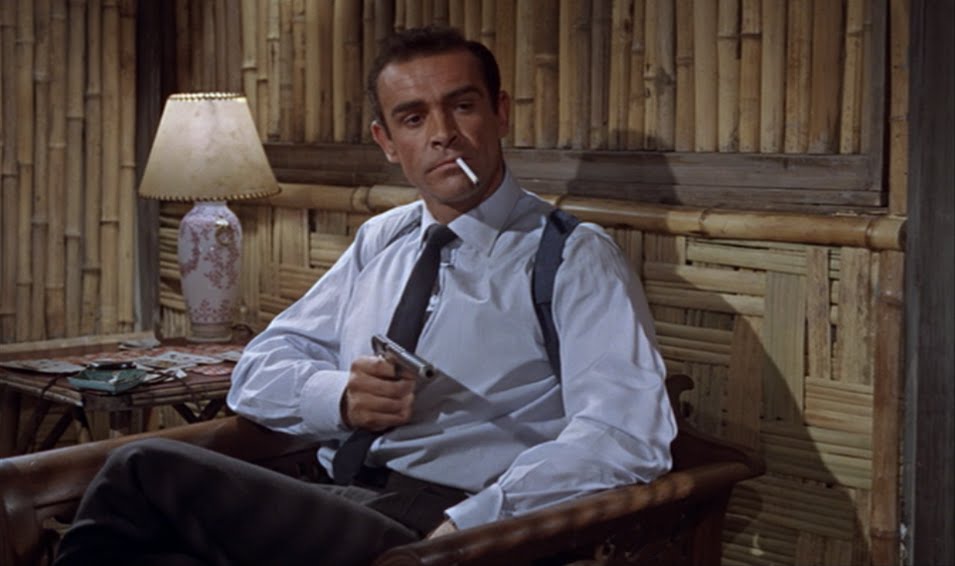
Happy 82nd birthday to Sean Connery, and with 'Dr No' celebrating its 50th anniversary this year, what better still to illustrate this post than the iconic moment that introduced several generations of moviegoers to Bond ... James Bond? Seriously, has anyone else ever made smoking, roulette tables, bow ties or dinner jackets look this cool?

Read More
Posted in Sean Connery | No comments

Sunday, 27 May 2012

The Offence

Posted on 03:28 by Unknown

Financed by United Artists as part of the deal Sean Connery cut in return for resuming the mantle of James Bond in ‘Diamonds Are Forever’, Sidney Lumet’s ‘The Offence’ is, variously, a psychological portrait of a man cracking up under the pressures of the job, a two-hander that explores duality and the transference of guilt, and cynical commentary on the nature of authority. All packed into 108 minutes, without any real set-dressing, and against a backdrop of bland, arterial Britain in the 70s. (The film was shot in and around Bracknell, Berkshire and Lumet makes the place look like purgatory with a shopping precinct.)

Actually, make that a four-hander. Following a brief introductory sequence detailing a stakeout at a local school (a child molester is going about his bad business in the area) and the subsequence disappearance of a young girl, what follows is three extended sequences that play off Sergeant Johnson (Connery) against his long-suffering wife Maureen (Vivien Merchant), his irascible superior Detective Superintendent Cartwright (Trevor Howard), and the inscrutable Kenneth Baxter (Ian Bannen), the man arrested on suspicion of abducting the girl. The opening frames make it clear that Johnson beats the shit out of Baxter during an utterly unorthodox interrogation. Lumet plays the interrogation scene twice, the first time riddled with lacunae. Baxter is carted off to hospital and Johnson placed under suspension.

Lumet leaves the exact nature of the Johnson/Baxter mano-a-mano under wraps, with Johnson eking out precious few details to Maureen during their argument when he returns home and hits the bottle. This sequence features an astounding five minute monologue when Maureen tries to get her curmudgeonly husband to open up about the job and the things that are turning him into a distant and unfeeling stranger; Johnson responds with a sustained rant detailing the worst cases he’s worked on and the appalling things he’s seen. It’s a powerhouse verbal set-piece and Connery pulls it off with jaw-dropping intensity.


The Johnsons’ domestic disharmony is interrupted by his colleagues: events have taken a more serious turn and he’s required to return to the police station. Here he’s braced by Cartwright. The antagonism between the two men is immediate. Cartwright doesn’t get much out of Johnson about the Baxter incident; they argue instead about authority. Certainly the most stentorian section of the film, ending with Cartwright literally bellowing at Johnson, it’s only when Cartwright takes his leave that Johnson, in a rare moment of introspection, reflects back on the interrogation. This occupies the last twenty five minutes of the film, Johnson and Baxter’s battle of wits playing out in full.

The contrast between Johnson’s vacillation from bullying to ingratiation (he seems to be working a one-man good cop/bad cop routine) and Baxter’s whiny but insistent needling provides the dynamic. The end result is inevitable, but it’s how Lumet (working from a script by John Hopkins, based on his own stage play) arrives at the final outburst of violence that ups the ante on the discomfort.

‘The Offence’ isn’t an easy film to watch. Lumet reinforces the staginess of the source material rather than trying to open it out. The locations are glum. The characters are deeply flawed and extremely hard to empathise with. There’s violence without catharsis, revelation without explanation. Whether Baxter is ultimately guilty is never resolved. He’s arrested on very little basis, denied all rights and treated shoddily by even the most journeyman of the coppers, even before the indignant and dangerously edgy Johnson gets in on the act. There’s a telling moment when Johnson and his colleagues lay odds on Baxter being the guilty party, based on nothing more than the look of him. So is Johnson judge, jury and executioner, or the opposite side of the coin to Baxter? Is guilt individual or collective? The film probes hard and deep and finds only more questions as the layers are peeled away.
Read More
Posted in Ian Bannen, Sean Connery, Sidney Lumet, Trevor Howard, Vivien Merchant | No comments

Wednesday, 23 May 2012

BOND-A-THON: Diamonds Are Forever

Posted on 13:54 by Unknown

‘Diamonds Are Forever’: in which the director of ‘Goldfinger’ is back at the helm, Sean Connery is back in the lead role, God is in His heaven and all is right with the world. Carlsberg don’t do movie reviews …

Joking apart, ‘Diamonds Are Forever’ is – it has to be said – a frustrating and ultimately pretty mediocre outing for 007. It’s a film of two halves: part one is basically How The Diamond Smuggling Operation Works, while part two is What The Diamonds Are Used For. Part one is moderately entertaining with some touches of mordant humour (the funeral parlour and the straight-out-of-central-casting mob guys raise a smile) but lacks the scale and spectacle expected of a Bond movie. Part two delivers the world domination shenanigans, the villain’s fully kitted out secret base and the requisite explosions, but pads out the action with a ridiculously over-egged sequence involving a cassette tape and Jill St John in a harlequin bikini that plays like something out of ‘The Benny Hill Show’.

It’s worlds apart from the character-driven approach to ‘OHMSS’ and that, apparently, is how the producers wanted it. Although Peter Hunt was offered directorial duties, scheduling conflicts with another film put him out of the running and Broccoli and Saltzman re-engaged the services of Guy Hamilton, the man who’d pretty much defined the Bond formula with ‘Goldfinger’. Indeed, an early draft of the script had Auric Goldfinger’s vengeful brother as antagonist. With George Lazenby exiting the role, the producers consider Michael Gambon and – unbelievably – Adam West, before signing John Gavin. At this point, United Artists pulled rank, put their foot down and demanded Sean Connery back as Bond.


This put Connery in a pretty awesome bargaining position and as well as bagging a then record-breaking $1.25million fee – which he used philanthropically to establish the Scottish International Education Trust – he got backing for two non-Bond projects. Only one of these – Sidney Lumet’s intense and uncomfortable ‘The Offence’ – came to fruition. The other, an all-Scottish adaptation of ‘Macbeth’, fell through after Polanski’s version made it into production first. Meanwhile John Gavin, technically still under contract, was paid in full.

The film opens with what seems, for about the first two thirds, like a narratively pointless prelude. In this prelude … now, how do I describe it without sounding blunt … Bond beats the shit out of a couple of guys then rips the bikini top off a sunbathing beauty and threatens to strangle her with it, and in like manner ascertains the whereabouts of one Ernst Stavro Blofeld (Charles Grey), fugitive from justice. And here we must pause while I rant about something that pisses me right off every time I watch what is otherwise a no-brainer low-to-mid-level slab of 007 escapism. 

This vengeful hit-people-strangle-people-find-Blofeld-kill-the-motherfucker business seems a lot like the filmmakers’ atonement for daring to end ‘OHMSS’ on a downer, Bond’s best girl dead the agent himself shattered. Only … the Bond’s first port of call in the aforementioned investigative continuity is quite obviously Japan, suggesting ‘Diamonds Are Forever’ as a direct follow-on from ‘You Only Live Twice’. While this is a logical step in one respect (it reintroduces Connery’s Bond from that actor’s last appearance), it makes utterly no sense in another, since a Connery-only continuity disallows for the death of Tracey di Vincenzo – indeed, it disallows for Bond to ever have been married at all – and even allowing for the fact the Blofeld had the temerity to escape at the end of ‘You Only Live Twice’, Bond’s obsessive pursuit of him at the start of ‘Diamonds Are Forever’ seems OTT. Unless Bond was out for revenge for the death of his wife, which he doesn’t seem to be because of … well, see above.

In short, it’s all a bit too meta. And things just get worse with the appearance of Blofeld. Bearing in mind that the very first scene of the movie contrives to bring to mind ‘You Only Live Twice’, in which Charles Grey plays an ally of Bond’s who is murdered by SPECTRE agents, where I ask you is the sense in casting that selfsame gentleman as the SPECTRE-commanding Blofeld himself? No matter how good Grey is in the role – and he’s very good indeed; it’s difficult to pick a definitive Blofeld from the quartet of Anthony Dawson, Donald Pleasance, Telly Savalas and Charles Grey – the close proximity of his appearances in the Bond chronology, accentuated by the diametrically different characters, just plain bugs me.


So: Bond tracks down Blofeld, seemingly dispatches him, Shirley Bassey belts out the theme song, and some naked women gyrate in silhouette. (I really ought to spend some time during this retrospective discussing the work of Maurice Binder, but I’m not sure I have sufficient command of the English language to explicate “naked chicks gyrating in silhouette” beyond, oh I don’t know, five words.) Next up, M (Bernard Lee) is delivering some expository dialogue about diamonds and Bond’s off to Amsterdam to infiltrate a smuggling operation.

All of which is fairly low-key stuff for a Bond movie. Hamilton keeps the pace up, though, and Bond is rewarded by the charms of Tiffany Case (St John). And here we pause for another rant. Jill St John is a looker plus VAT; beyond that, she has real screen presence and a mischievous charm; beyond that her IQ of 162 speaks for itself. In the first half of ‘Diamonds Are Forever’, the script allows her to play Tiffany Case – and she relishes the performance – as a brassy, smart-talking dame, full of sass, sarcasm and self-interest, and anyone watching the movie for the first time might be tempted, during this section, to earmark her as “all-time best Bond girl”. But ‘Diamonds Are Forever’, as noted earlier, is a film of two halves. And it’s second half unforgivably reimagines Tiffany Case as a shrill, simpering bimbo, robbed of juicy dialogue and reduced upping the cleavage quota. (Not that it needed upping after Lana Wood’s gravity defying appearance as the unsubtly named Plenty O’Toole. “Named after your father, perhaps?” Bond muses.)


And while I’m in rant mode, one further point of contention. ‘OHMSS’, for all its flaws, at least set out to present a human Bond. A Bond without gadgets who is required to use his wits, his charm and – whisper it softly – his intelligence. He connects with a woman, but realises he has to be the smooth-talker, the seducer, to get information out of other women (there’s a telling scene where he dallies with two of Blofeld’s potential brainwash victims, one after the other, and uses exactly the same dialogue to win them over … the second time, he’s not even putting any effort into it). ‘Diamonds Are Forever’ is an incredibly reductive film, not only returning Bond to the status of sex-as-a-fringe-benefit misogynist, but upping the ante on Fleming’s homophobia. Where the screenplay for ‘Goldfinger’ had the good grace to gloss over Pussy Galore’s Sapphic preferences and Bond, ahem, straightening her out, ‘Diamonds Are Forever’ just wades right in there and gives us the despicable characterisations of narratively unnecessary henchmen Mr Kidd (Putter Smith) and Mr Wint (Bruce Glover).

So, yeah, plenty of good reasons not to like ‘Diamonds Are Forever’ very much. Except that it’s often stupidly entertaining. Prime example: the utterly bonkers scene where Bond smashes into a fake moon landing, steals a moon buggy and kicks off a high speed chase through the Nevada desert, a piece of what-the-fuckery so magnificently deranged it’s as if Alejandro Jodorowsky had shown up at United Artists and convinced them to give him a shot at making a blockbuster. There are plenty of other moments like this, some sifted in as grace notes – Q (Desmond Llewellyn) cheating at the slot machines and blithely leaving his winnings behind, chuffed above mere monetary rewards that his latest prototype works so well – and others as set-pieces, that leave you in no doubt that the film was one big wheeze, a deliberate means to slap some fun back into the formula.

Many have criticised Connery’s performance – uninterested, phoned-in – but I quite enjoy his casually ironic delivery and slightly aloof presence. He suggests all the snobbery of Bond from the first two films but smoothed with a touch of self-deprecation. If ‘Diamonds Are Forever’ is the Bond movie as elaborate joke, then Connery was definitely in on it. And it certainly made the transition to a new Bond easier when the next instalment took Roger Moore to Harlem and Caribbean in ‘Live and Let Die’, an opus as unapologetically racist as ‘Diamonds Are Forever’ is homophobic. There were changes ahead for the franchise, but political correctness wasn’t one of them.
Read More
Posted in Bernard Lee, Bond-a-thon, Charles Gray, Desmond Llewellyn, Guy Hamilton, Jill St John, Sean Connery | No comments

Saturday, 5 May 2012

BOND-A-THON: You Only Live Twice

Posted on 09:11 by Unknown

The first four films collectively established most of the tropes: the girls, guns, gadgets and globetrotting; the pre-credits sequences; the big ballad theme songs; and the evil genius villains in their fabulously appointed lairs. ‘You Only Live Twice’ slotted in place one more Bond benchmark. While ‘Dr No’, ‘From Russia with Love’, ‘Goldfinger’ and ‘Thunderball’ are reasonably faithful adaptations of Fleming’s novels, the narrative of ‘You Only Live Twice’ deviates wildly from its source material. The franchise would only make one return to novel-based veracity with ‘On Her Majesty’s Secret Service’, after which things moved further and further away from the world of Fleming’s books until, for the most part, only the titles remained … and when the titles of the novels were exhausted, the short story collections were raided, and finally, for the first of the Brosnan Bonds, they resorted to using the name of Ian Fleming’s house in Jamaica.

In the chronology of the novels, ‘You Only Live Twice’ follows ‘On Her Majesty’s Secret Service’ and (SPOILER ALERT) opens with Bond still struggling to cope nine months after his wife Tracy’s death at the hands of a vengeful Blofeld (SPOILERS END). He’s messed up his last two missions, he’s becoming increasingly disenfranchised from his professional life, and M is at his wits’ end. M sends Bond on a seemingly impossible mission to Japan to wrest what amounts to state secrets from the head of the Japanese secret service, ‘Tiger’ Tanaka. Tanaka, incensed at the presence on Japanese soil of an eccentric foreigner (dude turns out to be Blofeld) who has installed himself in an ancient castle surrounded by a garden of death (but unable to do anything through legitimate channels), offers Bond the information he requires in return for an act of assassination. Here, essentially, we have Bond as a broken man; Bond – more than in any of the other novels – as a state-sanctioned hitman. ‘You Only Live Twice’ arguably represents the most interesting thing Fleming did with his creation, even if long passages of the novel amount to little more than Fleming ranting about the Japanese being a cruel and uncivilized race. (Racism in an Ian Fleming novel?!? Say it ain’t so!)

In the film, the setting is Japan, ‘Tiger’ Tanaka features (albeit in a more collaborative role) and Blofeld is the villain. A sequence where Bond (Sean Connery) disguises himself as a native and joins a community of Ama divers in order to get close to the villain’s base is replicated, and a scattering of references or fragments of dialogue similarly recall the source material. But vast sections of the storyline – including a dockyard fight, a hair’s-breadth escape from a plummeting light aircraft, a helicopter battle, and a bunch of ninjas aiding Bond in his assault on a rocket base hidden in a dormant volcano – belong entirely to the imagination of Roald Dahl. Yes, that Roald Dahl. ‘You Only Live Twice’ was scripted by the guy who wrote ‘Charlie and the Chocolate Factory’ and ‘The Fantastic Mr Fox’. (Although, to be fair, anyone familiar with his barbed stories for adults – particularly in the slim but razor-sharp collection ‘Switch Bitch’ – will easily recognise Dahl’s wilful perversity.)


Director Lewis Gilbert – an established talent in the British film industry with naval classics ‘The Sea Shall Not Have Them’, ‘Carve Her Name with Pride’, ‘Sink the Bismarck!’ and ‘HMS Defiant’ under his belt, and fresh off ‘Alfie’ – joined the Saltzman/Broccoli camp for the first of three Bond productions. He would return for the Roger Moore extravaganzas (and I’m not necessarily using that word in a good sense) ‘The Spy Who Loved Me’ and ‘Moonraker’. Gilbert strikes exactly the right tone, balancing the patent absurdities of the story with an adrenaline rush of high adventure. If the Bond movies are, at base, a delivery system for kick-ass escapist action sequences and iconic posturing, then Gilbert did as much in ‘You Only Live Twice’ to streamline the aesthetic as Guy Hamilton did with ‘Goldfinger’.

Legendary cinematographer Freddie Young – who had already lensed over 100 films, including Powell and Pressburger’s ‘49th Parallel’ and David Lean’s ‘Lawrence of Arabia’ – was assigned DoP duties; like Gilbert, it was his first Bond movie; unlike Gilbert, he wouldn’t return. Editor/second unit director Peter R Hunt followed up the work he’d done on the previous Bonds, and was on the verge of helming his very own movie … but that’s a story for the next review. Before-the-camera regulars Bernard Lee, Lois Maxwell and Desmond Llewellyn reprise their roles, to dependable effect, as M, Moneypenny and Q respectively, the latter providing 007 with arguably the franchise’s most memorable gadget: the autogyro “Little Nellie”.


Man of the match award, however, goes to Ken Adam. And it’s appropriate that we take ‘You Only Live Twice’ as the point in this retrospective where we pause and raise a glass to the man and his indelible contribution to the Bond mythos.

Ken Adam was born Klaus Hugo Adam in Berlin in 1921. His family relocated to England in 1934 to escape the burgeoning influence of Nazism. At the outbreak of war, Adam joined the RAF and was assigned to 609 Squadron during the battle of Normandy. He was the only German fighter pilot in the RAF. Can I just repeat that sentence, purely to reinforce the historical and nationalist importance of it? Ken Adam was the only German fighter pilot in the Royal Air Force.

Oh yeah, and he built some fucking awesome sets for the Bond movies. Dr No’s fully-kitted out secret base? Ken Adam. Fort Knox in ‘Goldfinger’? Ken Adam. The submarine base and Stromberg’s undersea lair in ‘The Spy Who Loved Me’? Ken Adam. The cost of the volcano set, which incorporated a helicopter landing pad and a functional monorail system, was a cool $1million – i.e. the entire budget of ‘Dr No’. (It was his work on ‘Dr No’, incidentally, that brought him to Kubrick’s attention; he created the War Room in ‘Dr Strangelove’.) His association with producer Saltzman continued with the Len Deighton adaptations ‘The Ipcress File’ and ‘Funeral in Berlin’. And you’ve gotta love someone who could go from production designer duties on Kubrick’s ‘Barry Lyndon’ in 1975, to getting down and dirty with Tinto Brass’s ‘Salon Kitty’ the following year. His last big screen job, at the age of 80, was Istvan Szabo’s ‘Taking Sides’ (from Ronald Harwood’s play on the interrogation of conductor Wilhelm Furtwangler at the end of the war) in 2001. In 2003 he was awarded on OBE.


Think of Bond and you think of his nemeses. Think of the villains and you think of their futuristic bases. Those astounding sets; those explosive finales. Ken Adam’s work established the template as definitively as Monty Norman’s “James Bond Theme”, Ursula Andress’s curvaceous emergence from the waves, or the image of a white cat on Blofeld’s lap. Peter Lamont’s production design on the later films owes to Ken Adam in spades; it’s telling that Lamont was an assistant art director on ‘You Only Live Twice’.

One other “first” for ‘You Only Live Twice’: Blofeld. A faceless éminence grise in ‘From Russia with Love’ and ‘Thunderball’, his machinations and by extension his threat to Bond represented, respectively, by ‘Red’ Grant/Rosa Klebb and Emilio Largo, here he takes centre stage as antagonist. Here, we see his face. Played by Donald Pleasance – a diminutive figure against Connery, but a study in steely-eyed malevolence for all that – he’s bald, facially scarred and almost a parodic figure. Almost. Pleasance avoids the characterisation opted for by most of the actors, before and after him, who essayed Bond villains. He doesn’t play Blofeld as an egomaniac whose sociopathy is hidden behind a layer of civilised behaviour. He plays him as a ruthless bastard who’s getting paid a fuckton of money for doing a job and it doesn’t bother him in the slightest that said job basically involves provoking the USA and the USSR into a shooting war. A ruthless bastard who doesn’t tolerate fuck-ups. A ruthless bastard who permits himself a soupcon of superiority when Bond is in his clutches but still recognises him as a threat; a villain who is prepared to execute Bond himself rather than leaving the task to an underling.


Donald Pleasance’s Blofeld might not get to spout anything as glib as Auric Goldfinger’s “No, Mr Bond, I expect you to die” or as calculating as Hugo Drax’s “Look after Mr Bond – see that some harm comes to him”, but his high-pitched “Kill Bond! Now!” has an urgency that makes most of 007’s other enemies seem a bit girly by comparison.
Read More
Posted in Bernard Lee, Bond-a-thon, Donald Pleasance, Ken Adam, Lewis Gilbert, Sean Connery | No comments

Tuesday, 24 April 2012

BOND-A-THON: Thunderball

Posted on 12:25 by Unknown
The story behind ‘Thunderball’ is arguably more eventful than either the resulting novel or film, so let’s spend a few hundred words on it.

Four years before Saltzman and Broccoli kicked off the movie franchise with ‘Dr No’, Ian Fleming was already looking towards a big-screen incarnation of his protagonist. It was 1958 and Fleming’s friend Ivar Bryce put him in touch with Kevin McClory, a writer/director on the verge of making his debut with a film called ‘The Boy and the Bridge’. Another mutual friend of Fleming’s and Bryce’s – Ernest Cuneo (to whom the novel ‘Thunderball’ is dedicated) – joined the party and the foursome formed a production company, Xanadu Productions.

Taking Xanadu – pace Samuel Taylor Coleridge and the name of Charles Kane’s palatial bolthole in Orson Welles’s ‘Citizen Kane’ – as an elaborate folly, the name couldn’t have been better chosen.

Between the formation of Xanadu Productions and McClory’s ‘The Boy and the Bridge’ opening to public disinterest and meagre box office takings (at which point Fleming’s interest in making a film nosedived), the four men collaborated, to various degrees, on a basic idea involving a stolen plane and underwater action sequences which mutated through about ten different treatments and/or screenplay drafts. In late 1959, with Fleming about to depart on a round-the-world tour for a travelogue commissioned by The Sunday Times, McClory engaged the services of Jack Whittingham, who had two decades’ experience writing for film. With Whittingham on board, a full treatment was completed, followed quickly by a script. Whittingham and McClory’s title was ‘Longitude 78 West’. Fleming approved, albeit with the suggestion that it be retitled ‘Thunderball’.

The script never made it into production. Fleming, who customarily spent two months at his Jamaican house, Goldeneye, where he bashed out that year’s Bond novel working on a 2,000 words per day discipline interrupted only by snorkelling and Martinis, sat down at his typewriter in January 1960 and basically wrote a novelization. When, in 1961, McClory got hold of an advance copy of ‘Thunderball’, to say he was a tad miffed would be putting it mildly. He and Whittingham sued Fleming, initially petitioning to prevent publication. The High Court allowed ‘Thunderball’ to be published, but sanctioned any future action against Fleming by McClory and Whittingham.

Fast forward to 1963, Bond has gone big-screen in a big way, and McClory is suing Fleming for plagiarism. Unwell (the author had only nine months left to live), Fleming acceded to Bryce’s suggestion that he settle out of court. The deal: Fleming retained rights to the novel, subsequent editions to carry the acknowledgement “based on a screen treatment by Kevin McClory, Jack Whittingham and the Author” (my 2008 centenary edition has this in very small letters); McClory gained the literary and film rights for the screenplay.

This put producers Saltzman and Broccoli in the compromised position of having to bring McClory on board as producer for the film version. The deal they cut him allowed for remake rights, but not until ten years after the release of ‘Thunderball’. In the event, McClory waited almost twenty, producing ‘Never Say Never Again’ (featuring Connery in his unofficial return to the role) in 1983. The script was reworked by Lorenzo Semple Jnr with uncredited additions, on Connery’s insistence, from Dick Clement and Ian la Frenais (the background to ‘Never Say Never Again’ demands its own article); Irvin Kershner directed. ‘The Boy and the Bridge’ would remain McClory’s only directorial outing. McClory spent much of his career trying to kick-start his own rival Bond franchise and in the 90s unsuccessfully pitched a re-remake of ‘Thunderball’, under the frankly rubbish title ‘Warhead 2000’, starring Liam Neeson. It didn’t happen.

The Fleming-McClory/‘Thunderball’-‘Never Say Never Again’-‘Warhead 2000’ saga – spanning one novel, two films, and four decades – yielded enough material for a book of its own, Robert Sellers’s ‘The Battle for Bond’. Almost inevitably, this publication created its own flurry of controversy. The Ian Fleming Will Trust, apparently unhappy at the unapproved use of quotes from Fleming’s private papers, took action against the publisher, resulting in a hastily issued second edition, shorn of the contentious passages and unsubtly marketed as “the book they tried to ban”.

All of which brings us, 700 words into this review, to the film itself. ‘Goldfinger’ had made Bond an icon; ‘Thunderball’ rode its popularity to box office glory. Adjusting its box office take for inflation, ‘Thunderball’ is arguably the most successful entry in the franchise. Marking Terence Young’s return to the director’s chair (albeit for the last time on a 007 production), it establishes a few “firsts” in the oeuvre: the first Bond film to clock in at over two hours, and the first to be shot in Scope (only ‘Live and Let Die’ and ‘The Man with the Golden Gun’ would revert to 1:85 ratio).

It’s also – at least in my opinion – the first Bond film to feel just a little bit perfunctory. The pre-credits sequence, while reintroducing some of the “modifications” on the Aston Martin DB5 from ‘Goldfinger’ (and seemingly forgetting that it got written off in that film), throws in a jet-pack for good measure, promising all kinds of high-flying fun and games. Yet its mini-story, involving a fake funeral and Bond (Connery)’s revenge on the assassin of his colleagues, plays out in muted colours, without any of the style or urgency of the explosive opening to ‘Goldfinger’, and features a bit of hand-to-hand that’s pretty shoddily staged and edited. This done, it’s on to the plot proper as Bond, convalescing at a health farm, becomes suspicious of a fellow guest. He’s right to be: conspiracy is afoot, and SPECTRE are behind it all. But before Bond can get a handle on things, a meticulously detailed plan is put into operation, an RAF bomber is hijacked, two atomic devices disappear and our old buddy Ernst Stavo Blofield (again unseen, again played by Anthony Dawson) is holding the world to ransom for … one hundred million pounds. (Yeah, take that, Dr Evil!)

The only lead is a French NATO pilot who was onboard the bomber; his sister, Domino (Claudine Auger), is holidaying in Nassau, so Bond convinces M (Bernard Lee) that it’s worth, ahem, checking her out, so it’s off to the Bahamas for a little sun, sea, sand and sex (oh, and a bit of spying, not that you’d notice) while the shadow of atomic destruction hangs over the free world. Unusually for a Bond movie, however, 007 doesn’t get his briefing from M till 45 minutes into the film. Terence Young spends a quite a bit of time setting out his stall, observing the intricacies of the SPECTRE plan – overseen by the suitably villainous Emilio Largo (Aldofo Celi) – with an attention to detail which brings to mind that of, say, John Frankenheimer charting the movements of Von Waldheim and LaBiche’s respective locomotives as if they were pieces on a chessboard in ‘The Train’. It’s easily my favourite part of the film.

When Bond gets to Nassau, commences his dalliance with Domino, starts staking out Largo’s operation and does his best to avoid death at the hands of SPECTRE hitwoman Fiona Volpe (Luciana Paluzzi), the film settles into a steady plod. It’s never boring, and there are a few scenes which turn the heat up a bit – Bond’s encounter with Largo’s pet sharks; Fiona and her henchmen stalking Bond through a carnival – but there’s no major set-piece, nothing really iconic goes on and everyone just seems to be marking time ready for the big finale: an underwater battle followed by some derring-do on Largo’s hydrofoil yacht. But before we don the snorkel and oxygen tank, let’s cast an eye over the Bond girls.

In the novel, Domino is Italian; the film makes her French in line with Auger’s nationality (she was Miss France 1958, sexism fans). Likewise, Richard Maibaum and John Hopkins’s original draft of the script had Fiona as a flame-haired Irish femme fatale, Fiona Kelly. With Paluzzi delivering the goods in the redhead stakes but not the Gaelic ones, the character’s name was changed to Fiona Volpe, Fiona being – y’know – a traditional Italian girl’s name. In all fairness, though, Paluzzi is pretty awesome and certainly captures the imagination in a way Auger doesn’t.

Adolfo Celi makes for a pretty intimidating villain; he’s ostensibly sophisticated in the way of most Bond nemeses, but Celi’s brooding physicality leaves you in no doubt that, under the surface, Largo is a thug – and a brutally efficient one at that. Speaking of “under the surface”, let’s effect an inelegant segue into the final section of this review (and with another 700 words on the clock since I last hit the word count button, it’s probably high time I started wrapping it up): the sub-aquatic stuff.

Fleming was a big scuba-diving fan and several of his novels feature highly descriptive passages of marine life. ‘Thunderball’ contains a remarkable sequence, sadly not replicated in the film, where Bond swims through the fuselage of a submerged aircraft to find it alive with octopi – “a red-eyed catacomb”. It’s surreal, creepy, and one of the very few moments in the Bond bibliography where the usually unflappable agent seriously loses his cool.

With a budget of $9million – a huge increase compared to the incremental pattern of ‘Dr No’ ($1million), ‘From Russia with Love’ ($2million) and ‘Goldfinger’ ($3million) – the filmmakers invested a hell of a lot in the underwater sequences. Some $90,000 was invested in diving equipment alone, while Largo’s yacht set the production back a cool half million. You know that old saw about how it’s all up there on screen? That’s certainly true of ‘Thunderball’ … perhaps to its detriment. There are five major bits of sub-aquatic shenanigans: the scuppering of the hijacked bomber and its camouflage on the sea bed; Bond’s nocturnal assessment of the yacht; Bond’s escape from Largo’s shark pool; Largo’s transfer of the atomic devices to the yacht; and the harpoons ‘n’ scuba gear free-for-all which occupies most of the last quarter of an hour and seems like a hell of a lot longer. These scenes grow increasingly interminable, as if, having spent so much on them, Young and the producers were damned if they weren’t going edit every goddamn bit of undersea footage into the final cut.

In the climatic battle, Bond and CIA contact Felix Leiter (Rik Van Nutter)’s American reserves wear red wetsuits; Largo’s bunch of all-purpose bad guys – appropriately enough – wear black. So when you get a shot like this one (he’s a good guy) …

… or this one (he isn’t) …

… things are fine. But there are way too many shots like this one …

… where the screen is full of indistinguishable figures framed in meaningless tableaux. After three or four minutes, it was a case of full fathom five my capacity to give a shit lies. And the appalling speeded-up footage which constitutes Bond’s mano-a-mano smackdown with Largo … let us not speak of it. In fact, let us speak of just two more things:

Early release prints promised that James Bond would return in ‘On Her Majesty’s Secret Service’, but production difficulties resulted in ‘You Only Live Twice’ being selected as the next instalment and the credit was dropped.

The theme song is by Tom Jones. Johnny Cash actually submitted a song. Johnny Cash. Someone laid it over the opening credits and posted it on YouTube. Here’s the link. If 2,000 words on what isn’t even in my top five favourite Bond movies isn’t enough to make you question your sanity, this just might.
Read More
Posted in Adolfo Celli, Bernard Lee, Bond-a-thon, Claudine Auger, Luciana Paluzzi, Sean Connery, Terence Young | No comments

Monday, 16 April 2012

BOND-A-THON: Goldfinger

Posted on 12:00 by Unknown

Between them, ‘Dr No’ and ‘From Russia with Love’ set out the various elements of the formula: in the former, a megalomaniacal villain with an outrageous plan for world domination, exotic locations and beautiful women; in the latter, a tantalising pre-credits sequence, a big ballad theme song, the post-credits promise that Bond would return, and … er … more beautiful women.

‘Goldfinger’ put all of these elements together, went to town on the gadgets, and turned the whole thing up to eleven.

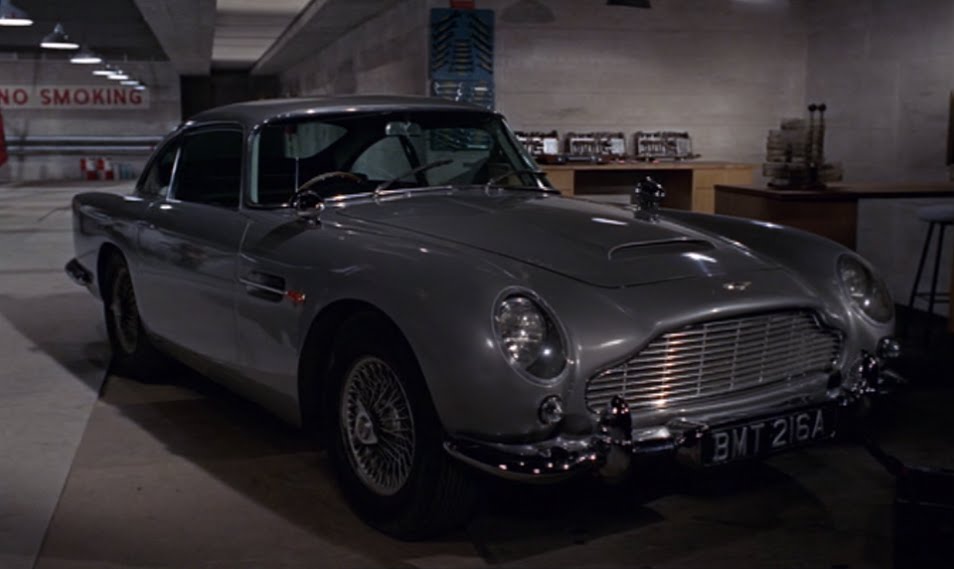
‘Goldfinger’ is either the quintessential Bond movie in terms of what a contemporary audience understands by (and expects of) a Bond movie, or it’s the point at which the rot set in. As cynical as I tend to be, I can’t quite bring myself to dislike ‘Goldfinger’ for setting the franchise on course for its mid-period formulaic turgidity. I ought to. And likewise, I ought to take it to task for sanding some of the rough edges off Bond, chamfering the character into a smooth adventurer rather a governmental blunt instrument. But, damn, it’s just too entertaining a movie for me to be mad at it for any real length of time. And, damn, if Shirley Bassey’s powerhouse theme song isn’t the definitive 007 chart-topper. And, double damn, if the Aston Martin DB5 (with or without modifications) isn’t the sexiest car ever made.


Moreover, none of the elements which so quickly became formulaic are particularly intrusive here; in fact, with only a couple of minor reservations, the film as a whole is as sleek and iconic as you could want a mainstream event movie to be. Director Guy Hamilton – helming his first Bond movie; he’d return, with variable degrees of success, for ‘Diamonds Are Forever’, ‘Live and Let Die’ and ‘The Man with the Golden Gun’ – eschews the shadowy espionage of Terence Young’s previous outing, sets out his stall with a bang (Bond blowing a drug plant sky-high in the pre-credits scene, before electrocuting an assassin and tossing out a one-liner: “Shocking, positively shocking”), then opens the film proper in sunny Miami Beach as Bond interrupts nemesis-in-waiting Auric Goldfinger (Gert Frobe)’s card-cheating system and dallies with his escort Jill Masterson (Shirley Eaton).

Goldfinger is on M (Bernard Lee)’s radar as a potential gold smuggler. Bond crosses him in Miami, then crosses him again at an English club during a round of golf characterised by rampant cheating by both players. Goldfinger proves himself a bad loser, and when the portly megalomaniac gets pissed off his monosyllabic Korean manservant Oddjob (Harold Sakata) tends to do something about it. (Come to think of it, ‘Goldfinger’ adds another staple to the formula: troublesome sidekick whose social deficiencies emphasize the über-villain’s ostensible sophistication.)

From Miami Beach to England to Switzerland (globe-trotting: another franchise check-box) as Bond tracks Goldfinger to his European metallurgical headquarters, discovers how the smuggling works (pretty ingenious, actually) and realizes that Goldfinger is mixed up in more than just a bit of import-export without making the relevant customs declarations. What he is mixed up in involves Chinese nuclear physics experts, US underworld bosses and an all-girl flying circus led by the unsubtly-named Pussy Galore (Honor Blackman).


Which brings us to a suitable place to consider those aforementioned reservations. ‘Goldfinger’ is the Ian Fleming novel I have the most trouble with. Not for the writing (it has the same Janet-and-John linguistic simplicity and narrative thrust of all the other Bonds) but because of the homophobia. Fleming settles on Pussy Galore as a lesbian for, seemingly, no other reason than to engage in a bit of gay-bashing, concluding with that teeth-grindingly reprehensible ideology – depressingly prevalent at the time Fleming was writing – that all a gay person needs to, ahem, straighten them out is a bit of vigorous straight sex from the right person.

Mercifully, the film – series regular Richard Maibaum co-scripted, this time with Paul Dehn (who went on to adapt John le Carre’s ‘The Spy Who Came in from the Cold’, about as un-Bond-like a project as possible) – leaves Pussy’s preferences merely hinted at, while the inevitable Bond/Pussy clinch is as perfunctory as any of Bond’s conquests in the later movies. What Maibaum, Dehn and Hamilton replaced the homophobia with, however, was a trace element of misogyny that would burgeon as the series developed. Fiona Pitt-Kethley’s poem ‘Bond Girl’ expresses what I’m getting at:

The girls were something else. All that they earned
for being perfect examples of their kind –
Black, Asian, White – blonde, redhead or brunette,
groomed, beauty-parlourised, pleasing in bed,
mixing Martinis that were shaken not stirred,
using pearl varnish on their nails not red –
was death. A night (or 2) with 007,
then they were gilded till they could not breathe,
chucked to the sharks, shot, tortured, carried off
or found, floating face downward in a pool.


Honey Ryder in ‘Dr No’ was in the wrong place at the wrong time; Tatiana in ‘From Russia with Love’ was duped just as unsparingly as Bond; both were characters as opposed to mere trinkets. If ‘Goldfinger’ pulled together the franchise’s defining qualities in terms of guns, gadgets and globe-trotting, then it also defined the Bond girl: glamorous, willing and expendable. For all that Honor Blackman got third billing as Pussy Galore, it was Shirley Eaton who gave the film its most iconic image – a woman: naked, gilded, dead.
Read More
Posted in Bond-a-thon, Gert Frobe, Guy Hamilton, Honor Blackman, Sean Connery, Shirley Eaton | No comments

Friday, 6 April 2012

BOND-A-THON: From Russia With Love

Posted on 15:11 by Unknown
During the latter stages of ‘From Russia With Love’, James Bond (Sean Connery) and defecting Russian cipher clerk Tatiana Romanova (Daniela Bianchi) are biding their time on a trans-European express train with a stolen decoding machine, waiting to disembark at the crucial moment to effect a strictly passport-free border crossing. Agents of SPECTRE, who have been using both of them as pawns in a meticulously constructed piece of espionage, attempt to prevent their escape and retrieve the machine.

A pick-up truck, parked across the tracks as if broken down, its bonnet propped open, stops the express. Bond anticipates the trickery. Dropping noiselessly off the train, he sneaks up on the SPECTRE agent on his blindside and slams the bonnet down on the guy’s hands before cold-cocking him with the butt of his Beretta. It’s all done with a ruthless efficiency. Earlier on, Bond slaps a distraught Tatiana – hard, really snapping her head back – to get information. Earlier still, he assists his opposite number in Istanbul in an unsanctioned revenge killing and tosses out a glib one-liner as the two of them stroll off.

For me, Connery in ‘From Russia With Love’ defines Bond. He’s basically a cold, ruthless bastard who employs a mixture of low cunning and unflinching brutality to achieve his ends. But it’s not for this reason that ‘From Russia With Love’ is my favourite Bond movie (yup, this retrospective is peaking two films in; thanks for joining me, folks, it’s been emotional). The film wins out for me because it’s what most of the Bond movies aren’t: a proper, straight-up, according-to-Hoyle espionage thriller.

That might not sound like I’m making much of a claim, but consider the basic Bond template: M calls 007 into his (or her, when we come to the Dame Judy Dench incarnation) office and lays down a few minutes of exposition: something naughty’s happening and the main suspect is a multi-billionaire industrialist/scientist/metallurgist/newspaper baron [delete as applicable]. Bond goes waltzing into the middle of said megalomaniac’s operation, announces himself as “Bond, James Bond” (whoops, there goes the cover), a bit of cat and mouse ensues, Bond gets laid, Bond gets captured, Bond frees himself, the bad guy’s secret base gets blown to shit.

Except for the getting laid bit …

… none of this malarkey happens in ‘From Russia With Love’. Which makes it the most un-Bond of the Bonds. And decidedly better for it. (Although in other respects, it establishes the pre-credits sequence, dancing girls in silhouette during the credits, a celebrity theme song – take a bow, Matt Monro – and Q department goodies as franchise tropes.)

What happens instead is that SPECTRE head honcho Ernst Stavro Bolfeld (Anthony Dawson – his face unseen and billed as “?” in the credits, presumably to detract from the fact he’d already appeared, and been dispatched, in the first Bond movie as Professor Dent) approves a plan by chess champion and all-round devious swine Kronsteen (Vladek Sheybal) to exploit Cold War tension between Britain and Russia, get their mitts on the much sought-after Lektor decoding machine, disgrace Bond and thereby enjoy a little payback for Dr No’s demise.

And what bait do you dangle in front of Britain’s top secret agent? That’ll be a pretty girl, then. Former Russian operations head Rosa Klebb (Lotte Lenya) – now working for SPECTRE – recruits Tatiana to seduce Bond. She also recruits Aryan psychopath Grant (Robert Shaw) to ensure Bond, Tatiana and the gadgetry don’t make it back to Britain.

Sent to Istanbul, when Tatiana is working at the Russian embassy, Bond makes contact with Turkish spymaster Kerim Bey (Pedro Armendariz, having a whale of a time playing as big a ladies’ man as 007). En route to the acquisition of the Lektor (was Thomas Harris a fan of the movie, I wonder?) – which, incidentally, is a Macguffin worthy of Hitchcock – there’s all manner of red-herrings, with everyone in Istanbul seemingly spying on everyone else, and a subplot regarding rivalry between gypsy tribes, incorporating a narratively redundant but leeringly lingered-upon bitch fight between two gypsy girls.

‘From Russia With Love’ was Ian Fleming’s fifth novel. While its predecessors had sold decently in the UK, he’d failed to crack the American market and, as he wrote to Raymond Chandler, he worried that he was running out of ideas. The book has a more experimental structure than the others, its first third dealing entirely with the plot against 007 and Bond himself not showing up for a good 100 pages. The last chapter intimates that Fleming was ready to call time. The final line is “Bond pivoted slowly on his heel and crashed headlong to the wine-red floor”.

All things considered, it’s an odd choice for a second instalment in what producers Saltzman and Broccoli were unambiguously developing into a franchise. (The closing credits teaser “The End … but not quite the end … James Bond will return in the next Ian Fleming thriller ‘Goldfinger’” is more than just a statement of intent; it’s an exercise in branding that your average Madison Avenue ad man would have been proud of.) They made damn sure, though, that the last scene of the film was nowhere near as dark as the novel’s.

As with ‘Dr No’, Richard Maibaum and Johanna Harwood collaborated on the adaptation, with Terence Young calling the shots. Series regulars Bernard Lee and Lois Maxwell return as M and Miss Moneypenny, while Desmond Llewellyn puts in his first appearance as Q. Eunice Gayson carries over her role as Sylvia Trench from ‘Dr No’, in the only intimation the franchise offers of a relationship outlasting the heat-of-the-moment frisson of Bond’s mission du jour.

Connery’s much more at home with the character this time around, and there’s none of the padding (excepting the gypsy girl smackdown) that punctuates ‘Dr No’. World domination silliness is given short shift. Genuinely suspenseful set pieces – Bond and Grant’s vicious hand-to-hand in a cramped train compartment; Bond’s duel with a helicopter; a speedboat chase – deliver more excitement than multiple explosions. Gadgets are minimal and used contextually instead of as the hi-tech deus ex machinas of the later films. In Bianchi’s Tatiana (albeit a dubbed and slightly stilted performance), we have a Bond girl who’s integral to the plot rather than just buxom set-dressing.

Best of all, though, the Bond of the novels gets the fullest filmic outing he’d have until Daniel Craig and Martin Campbell took the series back to its roots with ‘Casino Royale’. The polarity between character and actor that informed ‘Dr No’ seems harsher in ‘From Russia With Love’. Connery’s panther-like muscularity is more evident; his working-class tough-guy aura is never far away; and the suave, socially adroit façade of James Bond is never in more danger of being punctured than in his exchange with Grant after the latter (temporarily at least) has out-manoeuvred him.

“Red wine with fish,” Bond muses, remembering Grant’s restaurant car faux pas; “well, that should have told me something.” Voice as steely as his eyes, Grant contemptuously replies, “You may know the right wines, but you’re the one on your knees.”

As the youth of today would no doubt put it: PWNed, Mr Bond.


I originally reviewed ‘From Russia With Love’ in July 2008 as part of my Personal Faves project. Here’s the link. I’ve deliberately not referred to it in writing this article.
Read More
Posted in Bond-a-thon, Daniela Bianchi, Lotte Lenya, Robert Shaw, Sean Connery, Terence Young | No comments

Sunday, 25 March 2012

BOND-A-THON: Dr No

Posted on 03:16 by Unknown
Sean Connery: milkman, truck driver, coffin polisher, bodybuilder, actor. Oh yeah, and the definitive James Bond. Although he’d been a jobbing actor for a decade before he was cast as 007, his only lead role had been in the fey musical ‘Darby O’Gill and the Little People’. A son of Edinburgh, his trademark Scots burr would remain in place throughout his career, whether he was playing an Irish-American cop, a Russian submarine commander or an English secret agent.

It’s putting it mildly to say that producers Harry Saltzman and Albert R. Broccoli took a risk on him. The resolutely rugged and working class Connery was far removed from Ian Fleming’s snobbish and disdainful protagonist (who was it that described Bond “an upper class thug”?), leading director Terence Young to groom Connery into the character, getting him used to the suits, the casinos, the gentlemen’s clubs and the high life. It’s the polarity between actor and character which generates the frisson inherent in Connery’s portrayal of Bond.

‘Dr No’ was the sixth of Fleming’s novels, but was chosen as the first film after an original script developed by Fleming, Kevin McClory and Jack Whittingham – with the horribly prosaic title ‘James Bond, Secret Agent’ – wound up in a legal wrangle when Fleming decided to rework it for his 1961 novel ‘Thunderball’. The producers settled on ‘Dr No’ as having an exotic locale in Jamaica, a streamlined narrative, and one only really expensive set-piece (the explosive finale at Crab Key, the heavily-guarded island Dr No uses as his base).

At just over $1million, ‘Dr No’ was moderately budgeted even for the early 60s. Purpose of comparison: released the same year, John Frankenheimer’s ‘The Manchurian Candidate’ cost twice as much, John Ford’s ‘The Man Who Shot Liberty Valance’ three times, and David Lean’s ‘Lawrence of Arabia’ burned though $15million, a budget that wouldn’t be equalled by a Bond movie until 1977’s ‘The Spy Who Loved Me’.

Richard Maibaum, Johanna Harwood and Berkley Mather worked on the script, with uncredited additions from Young. Mather had generally worked in television and would have no other involvement in the franchise. Harwood returned for co-writer duties on ‘From Russia With Love’. Maibaum became a series regular, contributing to thirteen Bond movie scripts up to ‘Licence to Kill’.

Opening with a somewhat psychedelic and very dated set of opening credits (it’s the first and last Bond not to feature a pre-credits sequences), the story begins with the assassination of Jamaica-based British agent Commander Strangways (Tim Moxon) and the theft from his office of files on Crab Key and Dr No (just in case, you know, the title hadn’t tipped you off as to the villain’s identity). In London, spymaster M (Bernard Lee) briefs Bond (Connery) on Strangways’ disappearance and his investigation, on the Americans’ behalf, of tracking interference with Cape Canaveral rocket launches that seems to be emanating from his neck of the woods. (I’m assuming that in the early 60s it was reasonably plausible that America might need a bit of help from a handful of upper-class Brits.)

Bond’s mission is compromised from the off: no sooner has he arrived in Jamaica than there’s an assassination attempt – the first of several. One antagonist kills himself rather than talk, leading Bond to wonder who wields that kind of power. That’ll be the eponymous Dr No (Joseph Wiseman), whom Young teasingly keeps out of sight until the last third. No’s first scene shows us not the man himself but his power over his minions, as he puts the frighteners on Professor Dent (Anthony Dawson) and exhorts him to kill Bond.

Setting the pattern for most of the Bond villains, Dr No is refined, cultured (an in-joke has Goya’s portrait of the Duke of Wellington, stolen the year before the film went into production, in Dr No’s possession), articulate, megalomaniacal and the proud owner of a fully kitted-out secret base hidden from the eyes of the world. He works for SPECTRE (the Special Executive for Counter-intelligence, Terrorism, Revenge and Extortion), an underground organisation that takes on more significance in later films on account of its CEO, one Ernst Stavro Blofeld.

Setting the pattern for several decades of straight-up sexism, Bond takes an unreconstructed view of women and punctuates his spying with shagging as he dallies with baccarat-playing rich girl Sylvia Trench (Eunice Gayson) before he leaves for his mission, fools around with the treacherous Miss Taro (Zena Marshall) and enjoys an amorous encounter with Honey Ryder (Ursula Andress) as a reward for saving the day.

Unlike many of its successors, ‘Dr No’ is gadget-free. Q is present, but referred to not by the initial of his department but by name as Major Boothroyd. He’s also played by Peter Burton. Desmond Llewellyn wasn’t cast until ‘From Russia With Love’, when Burton was unavailable to reprise the role. Bond’s opposite number from the CIA, Felix Leiter (Jack Lord) also gets his first outing.

In terms of action, Young crafts a sleek and efficient thriller from his limited budget, with car chases, gunboats, shoot-outs, hand-to-hand combat, and an explosive denouement washing across the screen in glorious Technicolor. His direction, though, is often perfunctory and early scenes are padded with local colour. Viewed fifty years down the line, it’s an entertaining way to pass an hour and three quarters, but back then it was something new and exciting, banging at the doors of mainstream entertainment with enough force to create a global phenomenon. There’s no end credits promise that Bond would be back – ‘From Russia With Love’ kicked off that little tradition – but the box office receipts made it an inevitability.
Read More
Posted in Bernard Lee, Bond-a-thon, Jack Lord, Joseph Wiseman, Sean Connery, Terence Young, Ursula Andress | No comments
Older Posts Home
Subscribe to: Posts (Atom)

Popular Posts

  • BLACK VALENTINES: Thirst
    Let’s try a scenario on for size: boy meets girl; obstacles prevent them from being together; boy and girl get together any way; a major o...
  • Boarding Gate
    The first film of Olivier Assayas’s I saw was ‘Irma Vep’, a dreamy fantasia on two highly different forms of cinema – the work of French dir...
  • 13 FOR HALLOWEEN #1: Tenebrae
    “When you have eliminated the impossible, what remains – however improbable – must be the truth.” This quote, from Conan Doyle’s ‘The Hound ...
  • 13 FOR HALLOWEEN #4: The Unborn
    As with ‘Giallo’ a couple of weeks ago, I approached this knowing that it had been roundly peed on by the critics, only to spend the first h...
  • BOND-A-THON: A View to a Kill
    Beware the temptation of the snap judgement. Particularly when undertaking a movie-thon whose entries you’re watching sequentially rather th...
  • A Lonely Place to Die
    Julian Gilbey was behind 2007’s ‘Rise of the Footsoldier’ – a film so mired in trite hooliganism clichés and dodgy Lahdan accents that it ma...
  • Strait Jacket
    Shinji Ushiro’s hectic anime ‘Strait Jacket’ takes a premise that requires a suspension of disbelief plus VAT, welds it to a hefty chunk o...
  • WINTER OF DISCONTENT: Death Laid an Egg
    Picture the scene: yours truly and his good lady wife enter a fish ‘n’ chip shop, emphatically debating yours truly’s recent film-viewing ch...
  • Brave
    Has the Pixar bubble burst? Two years ago, I came out of ‘Toy Story 3’ with mixed feelings – so mixed that I elected not to post a review on...
  • SUMMER OF SATAN: Alucarda
    Juan Lopez Monctezuma’s hallucinatory exploitationer is a heady and unsubtle mix of nunsploitation, sexual hysteria, Satanism, vampirism, py...

Categories

  • 13 for Halloween (29)
  • Abbie Cornish (1)
  • Abel Ferrara (1)
  • Adam Gierasch (1)
  • Adam Green (2)
  • Adolfo Celli (1)
  • Adrian Brody (1)
  • Adrien Brody (1)
  • Adrienne Barbeau (1)
  • Ahna Capri (1)
  • aimless drivel (1)
  • Akon (1)
  • Al Pacino (1)
  • Alain Cuny (1)
  • Alain Delon (3)
  • Alamanta Keller (1)
  • Alan Galton (1)
  • Alan Sillitoe (16)
  • Alan Tudyk (1)
  • Albert Pyun (1)
  • Alberto de Mendoza (1)
  • Aldo Lado (1)
  • Aldo Massasso (1)
  • Aldo Valetti (1)
  • Alec McCowan (1)
  • Alec Newman (1)
  • Alejandre Aja (1)
  • Alejandro Jodorowsky (1)
  • Alessio Orano (1)
  • Alex Angulo (1)
  • Alex de la Iglesia (1)
  • Alex Lowe (1)
  • Alex Proyas (1)
  • Alexa Jago (1)
  • Alexandra Negrao (1)
  • Alexandra Paul (1)
  • Alfred Hitchcock (1)
  • Alfredo Mayo (1)
  • Alice Braga (1)
  • Alida Valli (1)
  • Amanda Seyfried (1)
  • Amando de Ossorio (1)
  • Amber Heard (4)
  • Amelia Kinkade (4)
  • Amy Adams (2)
  • Andre Garet (1)
  • Andrea Bianchi (1)
  • Andrea Occhipinti (1)
  • Andrea Riseborough (1)
  • Andrew Weir (1)
  • Andrzej Zulawski (1)
  • Andy Devonshire (1)
  • Angelina Jolie (1)
  • Angharad Rees (1)
  • Ania Pieroni (1)
  • Anita Ekberg (2)
  • Anna Friel (1)
  • Anna Massey (2)
  • Anna Mouglalis (1)
  • Anna Proclemer (1)
  • Annalynne McCord (1)
  • AnnaSophia Robb (1)
  • Anne Heywood (1)
  • Anne Libert (1)
  • Annette Vadim (1)
  • Anthony Andrews (1)
  • Anthony Franciosa (1)
  • Anthony Hopkins (2)
  • Anthony Mann (1)
  • Anthony Steffen (1)
  • Anton Diffring (1)
  • Antonio Banderas (1)
  • Antonio Margheriti (2)
  • Anuska Borova (1)
  • Ariel Vromen (1)
  • Ariel Winter (1)
  • Armando De Razza (1)
  • Asami (1)
  • Asia Argento (3)
  • Audrey Hepburn (1)
  • Aurelian Wiik (1)
  • Austin Stoker (1)
  • Banksy (1)
  • Barbara Bach (1)
  • Barbara Bouchet (4)
  • Barbara Cupisti (1)
  • Barbara Hershey (1)
  • Barbara Leigh-Hunt (1)
  • Barbara Shelley (1)
  • Barbara Stanwyck (1)
  • Barry Foster (1)
  • Barry Pepper (1)
  • Barry Sonnenfeld (1)
  • Ben Gazzara (1)
  • Ben Kingsley (2)
  • Ben Mendelsohn (1)
  • Ben Wishaw (2)
  • Benedict Cumberpatch (2)
  • Benicio del Toro (2)
  • Berenice Marlohe (1)
  • Bernadette Peters (1)
  • Bernard Lee (6)
  • Bernard McEveety (1)
  • Bernd Eichinger (1)
  • Bette Midler (1)
  • Betty White (1)
  • Bill Hader (1)
  • Bill Paxton (2)
  • Billy Connolly (2)
  • Bitto Albertini (2)
  • Black valentines (9)
  • blog-a-thon (1)
  • Blythe Danner (1)
  • Blythe Metz (1)
  • Bo Svenson (2)
  • Bob Belling (1)
  • Bob Hoskins (1)
  • Bob Larsen (1)
  • Bond-a-thon (26)
  • Brad Anderson (1)
  • Brad Dourif (2)
  • Brad Pitt (1)
  • Bradley Cooper (1)
  • Brahim Haggiag (1)
  • Brandon Jay MacLaren (1)
  • Brenda Chapman (1)
  • Brian Cox (1)
  • Brian Langtry (1)
  • Brian Trenchard-Smith (1)
  • Brigitte Lahaie (2)
  • Britt Ekland (2)
  • Britt Nicholls (1)
  • Brooke Adams (1)
  • Bruce Greenwood (1)
  • Bruno Mattei (1)
  • Bryce Wilson (1)
  • Burt Lancaster (1)
  • Byung-ho Son (1)
  • Byung-hun Lee (1)
  • Caitlin Wachs (1)
  • Cam Gigandet (1)
  • Cameron Mitchell (1)
  • Carey Lowell (1)
  • Carice van Houten (1)
  • Carl Parker (1)
  • Carla Borelli (1)
  • Carla Brait (1)
  • Carla Gugino (1)
  • Carlo De Mejo (1)
  • Carlo Gentili (1)
  • Carlos Aured (1)
  • Carole Bouquet (1)
  • Caroline Bliss (1)
  • Caroline Munro (2)
  • Carrie Anne Fleming (1)
  • Carroll Baker (2)
  • Cate Blanchett (1)
  • Catherine Deneuve (1)
  • Cathy Podewell (1)
  • Cathy Tyson (1)
  • Catriona MacCall (1)
  • Cecile de France (2)
  • Chan-wook Park (2)
  • Chandler Canterbury (1)
  • Chantal Contouri (1)
  • Charles Bateman (1)
  • Charles Gray (2)
  • Charlie Creed-Mills (1)
  • Charlize Theron (2)
  • Charlotte Gainsbourg (1)
  • Cheech Marin (1)
  • Chiara Caselli (2)
  • Chloe Sevigny (1)
  • Chow Yun Fat (1)
  • Chris Butler (1)
  • Chris Evans (3)
  • Chris Hemsworth (1)
  • Chris Mitchum (1)
  • Chris Pine (1)
  • Chris Renaud (2)
  • Christian Bale (1)
  • Christina Lindberg (1)
  • Christina Ricci (1)
  • Christina von Blanc (2)
  • Christine Taylor (1)
  • Christoph Waltz (2)
  • Christopher George (1)
  • Christopher Jones (1)
  • Christopher Kirby (1)
  • Christopher Lee (4)
  • Christopher Mintz-Plasse (1)
  • Christopher Walken (2)
  • Clare Bloom (1)
  • Claudine Auger (1)
  • Claudio Brook (1)
  • Clifton James (2)
  • Clint Eastwood (1)
  • Clint Howard (1)
  • Coen Brothers (1)
  • Colin Firth (1)
  • Coralie Rose (1)
  • Coraline Trinh Thi (1)
  • Corbin Allred (1)
  • Corinne Cleary (2)
  • Craig Collicott (1)
  • Craig Fairbrass (1)
  • Craig Robinson (1)
  • Cristina Airoldi (1)
  • Cristine Galbo (1)
  • Curt Jurgens (1)
  • Cyril Cusack (1)
  • Dagmar Lassender (2)
  • Daniel Alfredson (2)
  • Daniel Barber (1)
  • Daniel Craig (4)
  • Daniela Bianchi (1)
  • Danielle Panabaker (1)
  • Danny Huston (1)
  • Danny Lee (1)
  • Danny McBride (1)
  • Danny Trejo (2)
  • Dante Maggio (1)
  • Dardenne Brothers (1)
  • Daria Nicolodi (1)
  • Dario Argento (6)
  • Darren Aronofsky (1)
  • Darren Moore (1)
  • Darwin Joston (1)
  • Dave Gorman (1)
  • David Bell (1)
  • David Carradine (1)
  • David Caruso (1)
  • David Duchovny (1)
  • David Fincher (1)
  • David Hemmings (1)
  • David Hess (1)
  • David Hyry (1)
  • David Lynch (1)
  • David Morrissey (1)
  • David Schwimmer (1)
  • David Soul (1)
  • David Warbeck (1)
  • Deborah Francois (1)
  • Deborah Revy (2)
  • Declan O'Brien (1)
  • Dee Wallace (1)
  • Delphine Chaneac (1)
  • Deneen Melody (2)
  • Denholm Elliott (1)
  • Denise Richards (1)
  • Dennis Dun (1)
  • Dennis Farina (1)
  • Dennis Waterman (1)
  • Denzel Washington (1)
  • Derek Cianfrance (1)
  • Derrick Buttress (1)
  • Desmond Llewellyn (4)
  • Diana Lorys (1)
  • Diana Rigg (1)
  • Diane Lane (3)
  • Dinah Sheridan (1)
  • Diora Baird (1)
  • Dirk Bogarde (1)
  • documentary (6)
  • Dom DeLuise (1)
  • Domenico Paollela (1)
  • Dominic West (1)
  • Don Cheadle (1)
  • Don DeLillo (1)
  • Don Edmonds (2)
  • Don Michael Paul (1)
  • Don Pedro Colley (1)
  • Donald Pleasance (3)
  • Donald Sutherland (1)
  • Doug Bradley (1)
  • Dustin Hoffman (1)
  • Dyanne Thorne (4)
  • E Emmet Walsh (1)
  • Ed Speelers (1)
  • Ed Stoppard (1)
  • Eddie Marsan (1)
  • Eddie Marsen (1)
  • Edgar Wright (2)
  • Edith Lemerdy (1)
  • Edward Furlong (1)
  • Edward Norton (1)
  • Edwige Fenech (4)
  • Eiji Funakoshi (1)
  • Eiko Matsuda (1)
  • Eileen Daly (2)
  • Eleanoria Rossi Drago (1)
  • Eleonora Brown (1)
  • Eli Craig (1)
  • Eli Wallach (2)
  • Elizabeth Banks (1)
  • Elizabeth Taylor (3)
  • Ellen Ewusie (1)
  • Eloy de la Iglesia (1)
  • Elsa Lanchester (1)
  • Elsa Martinelli (1)
  • Elsa Pataky (1)
  • Ely Galleani (4)
  • Emilie di Ravin (1)
  • Emilio Miraglia (2)
  • Emily Blunt (5)
  • Emily Browning (2)
  • Emily Mortimer (4)
  • Emily Perkins (2)
  • Emily Watson (1)
  • Emma Bell (1)
  • Emma Thompson (1)
  • Emma Watson (2)
  • Emmanuelle Beart (1)
  • Emmanuelle Seigner (1)
  • Emmanuelle Vaugier (1)
  • Enrico Maria Salerno (1)
  • ensemble pieces (1)
  • Enzo G Castellari (2)
  • Eri Otoguro (1)
  • Eric Roberts (1)
  • Eric Weston (1)
  • Ernest Borgnine (2)
  • Estelle Lebefure (1)
  • Ethan Manquis (1)
  • Eva Bartok (1)
  • Eva Green (1)
  • Eva Leon (1)
  • Eva Mendes (1)
  • Evan Rachel Wood (1)
  • Ewa Aulin (1)
  • Ewan McGregor (2)
  • F Gary Gray (1)
  • Fabienne Dali (1)
  • Fabiola Toledo (1)
  • Fabrice du Welz (5)
  • Famke Janssen (2)
  • Femi Benussi (4)
  • Ferdinando Merighi (1)
  • Fernando Meirelles (1)
  • Fernando Rey (1)
  • Fernando Sancho (1)
  • fiction (1)
  • Flavio Bucci (1)
  • Florian Henckel von Donnersmarck (2)
  • Florinda Bolkan (1)
  • Frances Barber (1)
  • Franck Khalfoun (1)
  • Franco Fantasia (1)
  • Franco Nero (2)
  • Francois Perier (2)
  • Frank Grillo (1)
  • Frank Pierson (1)
  • Frank Wolff (2)
  • Fred Williamson (1)
  • Frieda Pinto (1)
  • Gabriele Ferzetti (1)
  • Gabriella Hall (1)
  • Gadi Harel (1)
  • Gary Oldman (3)
  • Gemma Arterton (2)
  • Geoffrey Palmer (1)
  • George Baker (1)
  • George Clooney (2)
  • George Hilton (3)
  • George Lazenby (1)
  • George Martin (1)
  • George Riddle (1)
  • George Rigaud (1)
  • Georges Corraface (1)
  • Georgia Groome (1)
  • Gerard Butler (1)
  • Gerard Depardieu (1)
  • Gert Frobe (1)
  • giallo (32)
  • Gian Maria Volonte (1)
  • Giancarlo Giannini (1)
  • Gianfranco Di Grassi (1)
  • Gianni Garko (1)
  • Gillian Anderson (1)
  • Gillian Hills (1)
  • Gillo Pontecorvo (1)
  • Gina Carano (1)
  • Gina Lollobrigida (1)
  • Giovanna Ralli (1)
  • Giovanni Lombardo Radice (1)
  • Giovanni Ribisi (1)
  • Girgio Cataldi (1)
  • Gotz Otto (2)
  • Grace Jones (1)
  • Grace Zabriski (1)
  • Graham Greene (1)
  • Grant Harvey (1)
  • Grant Heslov (1)
  • Greg Mottola (1)
  • Greta Gerwig (1)
  • Gunnar Hansen (1)
  • Guy Hamilton (3)
  • Guy Ritchie (2)
  • Ha-kyun Shin (1)
  • Hailee Steinfeld (1)
  • Hal Holbrook (1)
  • Halle Berry (1)
  • Harry Dean Stanton (1)
  • Harry H Corbett (1)
  • Harvey Korman (1)
  • Hayden Christensen (1)
  • Hayley Atwell (1)
  • Heath Ledger (1)
  • Heather Graham (1)
  • Heinz Bennent (1)
  • Helen McCrory (1)
  • Helen Mirren (1)
  • Helena Bonham Carter (1)
  • Helga Line (1)
  • Henry Silva (1)
  • Herbert Lom (1)
  • Herve Villchaize (1)
  • Hikari Mitsushima (1)
  • Hilary Swank (1)
  • Hiram Keller (1)
  • Hodder Kane (1)
  • Honor Blackman (2)
  • horror (1)
  • Horst Janson (1)
  • Howard Ross (1)
  • Howard Vernon (2)
  • Hugh Quarshie (1)
  • Hugo Weaving (1)
  • Humphrey Bogart (1)
  • Ian Bannen (2)
  • Ian Hendry (1)
  • Ida Galli (1)
  • Ida Lupino (2)
  • Idris Elba (2)
  • Ilisa Barbash (1)
  • Imelda Staunton (1)
  • Imogen Poots (1)
  • Ines Pellegrini (1)
  • Ingrid Pitt (1)
  • Irene Jacob (1)
  • Irene Miracle (1)
  • Iron Maiden (1)
  • Isabelle Adjani (1)
  • Isabelle Corey (1)
  • Isla Fisher (2)
  • Ivan Rassimov (4)
  • Izabella Scorupco (1)
  • J Blakeson (1)
  • J J Abrams (1)
  • Jack Hedley (2)
  • Jack Hill (1)
  • Jack Kehoe (1)
  • Jack Lord (1)
  • Jack Starrett (1)
  • Jackie Berroyer (2)
  • Jacky Cheung (1)
  • Jacob Latimore (1)
  • Jake West (1)
  • James Bolam (1)
  • James D R Hickox (1)
  • James Donald (1)
  • James Ellroy (1)
  • James Franco (2)
  • James Herbert (1)
  • James McAvoy (1)
  • James McTeigue (1)
  • Jameson Parker (1)
  • Jamie Chung (1)
  • Jamie Foxx (1)
  • Jamie Lee Curtis (3)
  • Jan Sisk (1)
  • Jane Alexander (1)
  • Jane Birkin (1)
  • Jane Bruton (1)
  • Jane Lynch (1)
  • Jane Ryall (1)
  • Jane Seymour (1)
  • Janet Agren (2)
  • Janet Greek (1)
  • Janet Julian (1)
  • January Jones (1)
  • Jared Harris (1)
  • Jason Bateman (1)
  • Jason Statham (2)
  • Jason Williamson (1)
  • Javier Bardem (1)
  • Jay Baruchel (1)
  • Jean Lafleur (1)
  • Jean Martin (1)
  • Jean Rollin (2)
  • Jean Sorel (2)
  • Jean-Francois Richet (2)
  • Jean-Louis Trintignant (1)
  • Jean-Luc Couchard (1)
  • Jean-Marc Barr (1)
  • Jean-Paul Belmondo (1)
  • Jean-Pierre Jarris (1)
  • Jean-Pierre Melville (5)
  • Jeff Bridges (2)
  • Jeffrey Wright (2)
  • Jemaine Clement (1)
  • Jena Malone (1)
  • Jennifer Connelly (1)
  • Jennifer Lawrence (2)
  • Jennifer Rhodes (1)
  • Jennifer Tilly (2)
  • Jennifer Westfeldt (1)
  • Jenny Spain (1)
  • Jeremiah Kipp (2)
  • Jeroen Krabbe (1)
  • Jess Franco (2)
  • Jesse Eisenberg (1)
  • Jessica Alba (1)
  • Jessica Chastain (1)
  • Jessica Harper (1)
  • Jessica Pare (1)
  • Jesus Puente (1)
  • Ji-eun Lim (1)
  • Jill St John (1)
  • Jim Jarmusch (1)
  • Jimmy Kaufman (1)
  • Jimmy McNichol (1)
  • Jo Van Fleet (1)
  • Joan Leslie (1)
  • Joanne Nail (1)
  • Jocelin Donahue (1)
  • Jodie Whittaker (1)
  • Joe Augustyn (2)
  • Joe Carnahan (1)
  • Joe Cornish (1)
  • Joe D'Amato (4)
  • Joe Dallesandro (1)
  • Joe Dante (1)
  • Joe Don Baker (2)
  • Joe Johnston (1)
  • Joe Wiezycki (1)
  • Joel Schumacher (1)
  • Joelle Coeur (3)
  • Joely Richardson (1)
  • Johanna Hofer (1)
  • John Boyega (1)
  • John Brumpton (1)
  • John C Reilly (1)
  • John Carpenter (10)
  • John Carradine (1)
  • John Carson (1)
  • John Cleese (1)
  • John Gielgud (1)
  • John Glen (5)
  • John Goodman (1)
  • John Halas (1)
  • John Hurt (1)
  • John Landis (1)
  • John Lasseter (1)
  • John Leguizamo (1)
  • John Lithgow (1)
  • John Malkovich (1)
  • John McQuade (1)
  • John Osborne (1)
  • John Rhys-Davies (1)
  • John Richardson (1)
  • John Rico (1)
  • John Ritter (1)
  • John Saxon (2)
  • John Sayles (1)
  • John Stockwell (1)
  • John Sturges (1)
  • John Thaw (1)
  • John Vernon (1)
  • John Woo (2)
  • Johnny Depp (3)
  • Jon Finch (1)
  • Jon Tenney (1)
  • Jonah Hill (1)
  • Jonathan Frid (1)
  • Jonathan McDaniel (1)
  • Joseph Kosinski (1)
  • Joseph Wiseman (1)
  • Josh Brolin (2)
  • Josie Ho (1)
  • Joss Whedon (2)
  • Joy Batchelor (1)
  • Juan Lopez Monctezuma (1)
  • Jude Law (1)
  • Judi Dench (6)
  • Julia Dietze (1)
  • Julia Duffy (1)
  • Julian Gilbey (2)
  • Julian Glover (2)
  • Julie Walters (1)
  • Kang-ho Song (1)
  • Karen Bach (1)
  • Kari Wuhrer (1)
  • Karin Schubert (2)
  • Karina Testa (1)
  • Kate Ashfield (1)
  • Kate Beckinsale (1)
  • Kate Magowan (1)
  • Katee Sackhoff (1)
  • Katharine Isabelle (4)
  • Katherine Heigl (1)
  • Katherine MacColl (1)
  • Kathleen Archer (1)
  • Kathleen Quinlan (1)
  • Kathryn Bigelow (2)
  • Kathy Najimy (1)
  • Katia Christine (1)
  • Katrina Bowden (1)
  • Katya Wyeth (1)
  • Keith Gordon (1)
  • Kelly Macdonald (1)
  • Kelly McGillis (1)
  • Kelly Preston (2)
  • Kelly Reilly (1)
  • Ken Adam (1)
  • Ken Russell (1)
  • Ken Wiederhorn (1)
  • Kerim Bursin (1)
  • Kerry Washington (1)
  • Kevin Bacon (1)
  • Kevin Costner (1)
  • Kevin Pollak (1)
  • Kevin Smith (1)
  • Kevin Spacey (1)
  • Kevin Tenney (2)
  • Kevin Zegers (1)
  • Kim Cattrall (1)
  • Kim Jee-Woon (1)
  • Kim Rossi Stuart (1)
  • Kirby Heyborne (1)
  • Kirk Douglas (2)
  • Kodi Smit-McPhee (1)
  • Kristanna Loken (1)
  • Kristen Wiig (3)
  • Kurt Russell (1)
  • L.Q. Jones (1)
  • Lamberto Bava (1)
  • Lance Henriksen (1)
  • Lara Naszinsky (1)
  • Lara Parker (1)
  • Lara Robinson (1)
  • Lars von Trier (2)
  • Laura Belli (1)
  • Laura Betti (1)
  • Laura D'Angelo (1)
  • Laura Fraser (1)
  • Laura Gemser (6)
  • Laura Mennell (1)
  • Laura-Leigh (1)
  • Lauren Graham (1)
  • Laurence Fishburne (2)
  • Laurent Bouhnik (1)
  • Laurent Lucas (1)
  • Laurie Zimmer (1)
  • Lawrence Dane (1)
  • Lea Michele (1)
  • Lea Pool (1)
  • Len Holden (1)
  • Lena Headey (1)
  • Leonardo diCaprio (2)
  • Leonor Watling (2)
  • Lesley-Anne Down (1)
  • Lewis Fiander (1)
  • Lewis Gilbert (4)
  • Liam Neeson (2)
  • Lieva Lone (1)
  • Liliana Cavani (1)
  • Lina Romay (2)
  • Linda Blair (1)
  • Linda Hayden (2)
  • Lindsay Anderson (1)
  • Lindsay Lohan (3)
  • Linnea Quigley (2)
  • Lisa Blount (1)
  • Lisa Howard (1)
  • Liv Boughn (1)
  • Lois Chiles (1)
  • Loretta Swit (1)
  • Lotte Lenya (1)
  • Lou Doillon (1)
  • Louis Jourdan (1)
  • Louis Letterier (1)
  • Luciana Paluzzi (1)
  • Luciano Ercoli (1)
  • Lucien Castaing-Taylor (1)
  • Lucio Fulci (4)
  • Ludivine Sagnier (2)
  • Luigi Bazzoni (1)
  • Luigi Caselleto (1)
  • Luigi Cozzi (1)
  • Lyndsy Fonseca (1)
  • Macha Meril (1)
  • Madeleine Kahn (1)
  • Madeline Smith (1)
  • Mads Mikkelsen (1)
  • Maggie Grace (1)
  • Mai Takahashi (1)
  • Maitland McConnell (1)
  • Mako Midori (1)
  • Malcolm McDowell (1)
  • Malcom Pinnegar (1)
  • Mamie Gummer (1)
  • Manuel Carballo (1)
  • Mapi Galan (1)
  • Marc Forster (1)
  • Marcel Sarmiento (1)
  • Marcus Carl Franklin (1)
  • Marcus Markou (1)
  • Maria de Medeiros (1)
  • Maria Mancini (1)
  • Maria Perschy (1)
  • Maria Pia Conte (1)
  • Maria Pia Giancaro (1)
  • Marilyn Burns (1)
  • Marilyn Roberts (1)
  • Marina Coffa (1)
  • Marina Malfatti (1)
  • Mario Bava (2)
  • Mario Bianchi (1)
  • Marisa Bartoli (1)
  • Mark Addy (1)
  • Mark Andrews (1)
  • Mark Damon (1)
  • Mark Feuerstein (1)
  • Mark Joffe (1)
  • Mark Kermode (1)
  • Mark Ruffalo (3)
  • Mark Strong (2)
  • Mark Wahlberg (1)
  • Marki Bey (1)
  • Marley Shelton (1)
  • Martin Campbell (2)
  • Martin Compston (1)
  • Martin Freeman (1)
  • Martin Ritt (1)
  • Martin Scorsese (1)
  • Martina Berti (1)
  • Martina Gedeck (1)
  • Martine Beswick (1)
  • Martine Brochard (2)
  • Marty Feldman (1)
  • Mary Woronov (2)
  • Maryam d'Abo (1)
  • Masumi Miyazaki (1)
  • Mathieu Amalric (1)
  • Mathilda May (1)
  • Matt Damon (1)
  • Maud Adams (2)
  • Maud Forget (1)
  • Maurizio Lucidi (1)
  • Max Phipps (1)
  • Max von Sydow (2)
  • Me Me Lai (1)
  • Meagan Good (1)
  • Meat Loaf (1)
  • Mel Brooks (2)
  • Mel Ferrer (1)
  • Melanie Laurent (1)
  • Melissa George (3)
  • Melissa Leo (1)
  • Michael Apted (1)
  • Michael Caine (6)
  • Michael Douglas (1)
  • Michael Eaton (1)
  • Michael Fassbender (1)
  • Michael Madsen (2)
  • Michael Nyqvist (3)
  • Michael Parks (1)
  • Michael Radford (1)
  • Michael Reeves (1)
  • Michael Rennie (1)
  • Michael Shannon (2)
  • Michael Sheen (1)
  • Michael Wincot (1)
  • Michael Winterbottom (1)
  • Michael York (1)
  • Michel Antoine (1)
  • Michel Lemoine (1)
  • Michel Lonsdale (1)
  • Michel Piccoli (1)
  • Michele Placido (1)
  • Michele Soavi (2)
  • Michelle Forbes (1)
  • Michelle Rodriguez (1)
  • Michelle Williams (1)
  • Michelle Yeoh (1)
  • Mick Richmond (1)
  • Mickey Rooney (1)
  • Miguel Ferrer (1)
  • Mike Hodges (1)
  • Mike Nichols (1)
  • Mike Reid (1)
  • Miki Mizuno (2)
  • Mila Kunis (3)
  • Min-sik Choi (2)
  • Minase Yashiro (1)
  • Minnie Driver (1)
  • Mireille Dargent (1)
  • Mischa Barton (1)
  • Monica Gayle (1)
  • Monica Keena (1)
  • Morgan Freeman (2)
  • Myleene Demongeot (1)
  • Nagisa Oshima (1)
  • Nao Nagasawa (1)
  • Narciso Ibanez Serrador (1)
  • Nastassja Kinski (1)
  • Natalie Portman (1)
  • Nathan Fillion (1)
  • Nathaniel Arcand (1)
  • Ned Beatty (1)
  • Neil Jordan (1)
  • Nick Frost (4)
  • Nick Jolley (1)
  • Nick Murphy (1)
  • Nick Park (1)
  • Nick Stabile (1)
  • Nico Mastorakis (1)
  • Nicolas Cage (2)
  • Nicoletta Elmi (1)
  • Niels Arden Oplev (1)
  • Nigel Kneale (1)
  • Nike Arrighi (1)
  • Nino Castelnuovo (1)
  • Noah Segan (1)
  • Noboru Iguchi (1)
  • Noomi Rapace (3)
  • Noriku Sengoku (1)
  • Norman Reedus (1)
  • Nottingham Contemporary (2)
  • Odette Yustman (1)
  • Ok-bin Kim (1)
  • Olga Kurylenko (2)
  • Oliver Megatron (1)
  • Oliver Stone (1)
  • Olivier Assayas (1)
  • Ornella Muti (2)
  • Oskar Werner (1)
  • Paddy Considine (1)
  • Pam Grier (2)
  • Paola Senatore (1)
  • Paolo Bonacelli (1)
  • Paolo Morra (1)
  • Pascal Laugier (1)
  • Pasquale Festa Campanile (1)
  • Pat Healy (1)
  • Patricia Clarkson (1)
  • Patricia Hermenier (1)
  • Patricia Rodriguez (1)
  • Patrick Lussier (2)
  • Patrick Macnee (1)
  • Patrick Magee (1)
  • Patrick Mower (1)
  • Patrick Stewart (2)
  • Paul A Partain (1)
  • Paul Bettany (1)
  • Paul Eddington (1)
  • Paul Giametti (1)
  • Paul Jones (1)
  • Paul Maslansky (1)
  • Paul Naschy (1)
  • Paul Newman (2)
  • Paul W S Anderson (1)
  • Penelope Buitenhuis (1)
  • personal faves (5)
  • Peta Sergeant (1)
  • Petch Osathanugrah (1)
  • Pete Postlethwaite (1)
  • Peter Collinson (2)
  • Peter Cushing (2)
  • Peter Fonda (1)
  • Peter Holden (1)
  • Peter Hunt (1)
  • Peter Sykes (1)
  • Petra Markham (1)
  • Philip Seymour Hoffman (1)
  • Pia Degermark (1)
  • Pier Angeli (1)
  • Pier Paolo Capponi (1)
  • Pier Paolo Pasolini (1)
  • Pierce Brosnan (4)
  • Pierfrancesco Favino (1)
  • Pierre Clementi (1)
  • Pierre Coffin (2)
  • Pierre Morel (1)
  • Piper Perabo (1)
  • Pixar (2)
  • Pratibha Parmar (1)
  • Preston Jones (1)
  • Prunella Ransome (1)
  • Quentin Tarantino (2)
  • R.G. Armstrong (2)
  • Rachel Nichols (3)
  • Rachel Weisz (2)
  • Rachelle Lefevre (1)
  • Radley Metzger (1)
  • Raf Baldassarre (1)
  • Raffaella Anderson (1)
  • Ralph Fiennes (2)
  • Ralph Richardson (1)
  • Raoul Walsh (1)
  • Ray Liotta (1)
  • Ray Lovelock (1)
  • Ray Simpson (1)
  • Ray Winstone (1)
  • Rebecca Brooke (1)
  • Rebecca Hall (1)
  • Rebekah Ellis (1)
  • Regis Roinsard (1)
  • Rena Niehaus (1)
  • Renato Cestie (1)
  • Rene Lefevre (1)
  • Rhonda Fleming (1)
  • Ricci Harnett (1)
  • Richard Bates Jnr (1)
  • Richard Burton (1)
  • Richard Crenna (1)
  • Richard Franklin (1)
  • Richard Gere (1)
  • Richard Harris (1)
  • Richard J Lewis (1)
  • Richard Kiel (1)
  • Richard Moll (1)
  • Richard Widmark (1)
  • Rick Yune (1)
  • Rie Ino'o (1)
  • Rie Kunawa (1)
  • Rita Tushingham (1)
  • Robb Leigh Davis (1)
  • Robbie Coltrane (1)
  • Robbie Lee (1)
  • Robert Altman (1)
  • Robert Brown (3)
  • Robert Carlyle (1)
  • Robert Davi (2)
  • Robert de Niro (1)
  • Robert Downey Jnr (2)
  • Robert Englund (1)
  • Robert Fuest (1)
  • Robert Hardy (1)
  • Robert Hoffmann (2)
  • Robert Hossein (1)
  • Robert Kerman (1)
  • Robert Mitchum (1)
  • Robert Morris (1)
  • Robert Prosky (1)
  • Robert Quarry (1)
  • Robert Rodriguez (1)
  • Robert Shaw (1)
  • Robert Zemeckis (1)
  • Robin McLeavy (2)
  • Rod Hardy (1)
  • Rod Mullinar (1)
  • Rod Serling (1)
  • Roddy McDowall (1)
  • Roger Corman (1)
  • Roger Duchesne (1)
  • Roger Moore (7)
  • Roger Spottiswoode (1)
  • Rolfe Kanefsky (1)
  • Romain Duris (1)
  • Romina Mondello (1)
  • Ron Carey (1)
  • Ron Perlman (1)
  • Ronnie Yu (1)
  • Ronny Jhutti (1)
  • Rosalba Neri (2)
  • Rosamund Pike (2)
  • Rose Byrne (2)
  • Rose McGowan (1)
  • Roy Dupuis (1)
  • Roy Ward Baker (1)
  • Rufus Sewell (1)
  • Ruggero Deodato (1)
  • Rupert Davies (1)
  • Rupert Wyatt (1)
  • Russell Brand (2)
  • Russell Crowe (1)
  • Rutger Hauer (1)
  • Ryan Gosling (1)
  • Ryan Little (1)
  • Saadi Yacef (1)
  • Sakura Ando (1)
  • Sally Smith (1)
  • Sally Yeh (1)
  • Sam Derby-Cooper (1)
  • Sam Dunn (1)
  • Sam Fell (1)
  • Sam Mendes (3)
  • Sam Neill (2)
  • Sam Peckinpah (2)
  • Sam Raimi (1)
  • Samantha Bond (1)
  • Samuel L Jackson (2)
  • Santiago Segura (1)
  • Sara Malakul Lane (1)
  • Sara Paxton (1)
  • Sarah Jessica Parker (1)
  • Sarah Polley (2)
  • Sarah Silverman (1)
  • satire (1)
  • Scarlett Johannson (1)
  • Scot McFadyen (1)
  • Scott Speedman (1)
  • Sean Byrne (1)
  • Sean Connery (8)
  • Sean Harris (1)
  • Selina Cadell (1)
  • Serena Grandi (1)
  • Serge Gainsbourg (1)
  • Serge Reggiani (1)
  • Sergio Bergonzelli (1)
  • Sergio Martino (2)
  • Sergio Stivaletti (1)
  • Seth McFarlane (1)
  • Seth Rogen (2)
  • Shane Black (1)
  • Shane Briant (10)
  • Shannon Elizabeth (1)
  • Shaun Benson (1)
  • Shawn Ashmore (1)
  • Shelley Conn (1)
  • Sherilyn Fenn (1)
  • Shiloh Fernandez (1)
  • Shinji Ushiro (1)
  • Shion Sono (1)
  • Shirley Cameron (1)
  • Shirley Eaton (1)
  • Sho Aikawa (1)
  • Shots on the Blog (28)
  • Sid Caesar (1)
  • Sidney Lumet (3)
  • Sigourney Weaver (1)
  • Silvia Tortosa (1)
  • Simon Andreu (2)
  • Simon Pegg (3)
  • Sleaford Mods (1)
  • small screen (1)
  • Sofia Coppola (1)
  • something for the weekend (13)
  • Son of Danse Macabre (1)
  • Sono Sion (1)
  • Sophie Marceau (1)
  • Sophie Vavasseur (1)
  • Stacy Keach (1)
  • Stanley Kubrick (1)
  • Stanley Tucci (1)
  • Stefano Accorsi (1)
  • Stefano Dionisi (1)
  • Stella Stevens (1)
  • Steph Wagstaffe (1)
  • Stephanie Bauer (1)
  • Stephanie Paul (1)
  • Stephen Billington (1)
  • Stephen Dillane (1)
  • Stephen Forsyth (1)
  • Stephen Hopkins (1)
  • Stephen King (1)
  • Stephen White (1)
  • Steve Buscemi (1)
  • Steve Carell (2)
  • Steve Coogan (2)
  • Steve Railsback (1)
  • Steven Berkoff (2)
  • Steven H Stern (1)
  • Steven Seagal (1)
  • Steven Soderbergh (1)
  • Steven Weber (1)
  • Strother Martin (1)
  • Su-chang Kong (1)
  • Sue Lyon (1)
  • Summer of Satan (18)
  • Susan Denberg (1)
  • Susan George (1)
  • Susan Scott (2)
  • Susan Tyrrell (1)
  • Susanna Kamina (1)
  • Suzy Kendall (2)
  • Sven-Bertil Taube (1)
  • Sybil Danning (1)
  • Sylvia Kristel (1)
  • Takahiro Nishijima (1)
  • Takanori Tsujimoto (2)
  • Takashi Miike (1)
  • Takumi Saito (1)
  • Talisa Soto (1)
  • Tamsin Egerton (1)
  • Tanya Roberts (1)
  • Tara Stone (1)
  • Tatiani Maslany (1)
  • Tatsuya Fuji (1)
  • Ted Post (1)
  • Telly Savalas (1)
  • Terence Fisher (2)
  • Terence Young (3)
  • Teri Hatcher (1)
  • Terry Gilliam (1)
  • Terry Stone (1)
  • Thandie Newton (2)
  • The Lonely Island (1)
  • Thea Gill (1)
  • Thierry Guetta (1)
  • Thomas Arana (1)
  • Thomas Doret (1)
  • Thomas L Dyke (1)
  • Thomas Reiner (1)
  • Thora Birch (1)
  • Thorley Walters (1)
  • Ti West (2)
  • Tim Burton (1)
  • Tim Daly (1)
  • Timo Vuorensola (1)
  • Timothy Dalton (3)
  • Tina Aumont (2)
  • Tina Romero (1)
  • Tisa Farrow (1)
  • Tobe Hooper (2)
  • Toby Stephens (1)
  • Todd Haynes (1)
  • Tom Cruise (1)
  • Tom Hanks (2)
  • Tom Hardy (2)
  • Tom Noonan (1)
  • Tom Savini (1)
  • Tom Skerritt (1)
  • Tom Wilkinson (1)
  • Tomas Alfredson (1)
  • Tomas Milian (2)
  • Tommy Lee Jones (2)
  • Toni Collette (1)
  • Tonino Valerii (1)
  • Tony Kendall (1)
  • Tony Leung (1)
  • Tony Scott (1)
  • Tony Todd (1)
  • Topol (1)
  • Traci Lords (1)
  • Trevor Howard (1)
  • Tyler Labine (1)
  • Udo Kier (3)
  • Ugo Liberatore (1)
  • Uli Edel (1)
  • Ulla Jacobson (1)
  • Umberto Lenzi (6)
  • Umberto Quintaville (1)
  • Ursula Andress (1)
  • Uschi Digard (1)
  • Uwe Boll (1)
  • Valeria Cavalli (1)
  • Valerie Leon (2)
  • Vanessa Hudgens (1)
  • Veronica Laria (1)
  • Veronica Miriel (1)
  • Victor Wong (2)
  • Victoria Maurette (1)
  • video nasty (1)
  • Vincent Cassel (3)
  • Vincent Schiavelli (1)
  • Vincenzo Natali (1)
  • Vinnie Jones (1)
  • Virginia Despentes (1)
  • Virginie Darmon (1)
  • Virginie Ledoyen (2)
  • Vittorio Storaro (1)
  • Viva la revolution (3)
  • Vivien Merchant (1)
  • Vlasta Vrana (1)
  • Waise Lee (1)
  • Walter Gotell (1)
  • Warren Oates (2)
  • Werner Herzog (3)
  • Wes Bentley (1)
  • Wilfrid Brambell (1)
  • Will Smith (1)
  • Will Yun Lee (1)
  • Willem Dafoe (2)
  • William Berger (1)
  • William Dear (1)
  • William Fichtner (1)
  • William Girdler (1)
  • William Ivory (1)
  • William Shatner (1)
  • Winona Ryder (1)
  • Winter of Discontent (65)
  • Woo-seong Kim (1)
  • Woody Harrelson (1)
  • Xavier Gens (1)
  • Xavier Samuel (1)
  • Yaphet Kotto (1)
  • Yasuzo Masamura (1)
  • Yeong-ae Lee (1)
  • Yorgos Lanthimos (1)
  • Yukie Kawamura (1)
  • Yves Montand (1)
  • Zachary Quinto (1)
  • Zack Snyder (1)
  • Zoe Daelman Chlanda (2)
  • Zoe Trilling (1)

Blog Archive

  • ▼  2013 (39)
    • ▼  July (8)
      • The World's End
      • Despicable Me 2
      • Despicable Me
      • THE AGITATION OF THE SMALL SCREEN: Steptoe and Son...
      • In brief: The Bling Ring
      • My Son, My Son, What Have Ye Done?
      • This is the End
      • What passes for normal service will resume shortly
    • ►  June (6)
    • ►  May (6)
    • ►  April (5)
    • ►  March (8)
    • ►  February (5)
    • ►  January (1)
  • ►  2012 (179)
    • ►  December (20)
    • ►  November (16)
    • ►  October (25)
    • ►  September (13)
    • ►  August (17)
    • ►  July (13)
    • ►  June (18)
    • ►  May (12)
    • ►  April (11)
    • ►  March (13)
    • ►  February (9)
    • ►  January (12)
  • ►  2011 (247)
    • ►  December (18)
    • ►  November (14)
    • ►  October (22)
    • ►  September (21)
    • ►  August (20)
    • ►  July (19)
    • ►  June (16)
    • ►  May (16)
    • ►  April (19)
    • ►  March (22)
    • ►  February (30)
    • ►  January (30)
  • ►  2010 (35)
    • ►  December (32)
    • ►  November (3)
Powered by Blogger.

About Me

Unknown
View my complete profile